Katie Vota
October 3, 2024
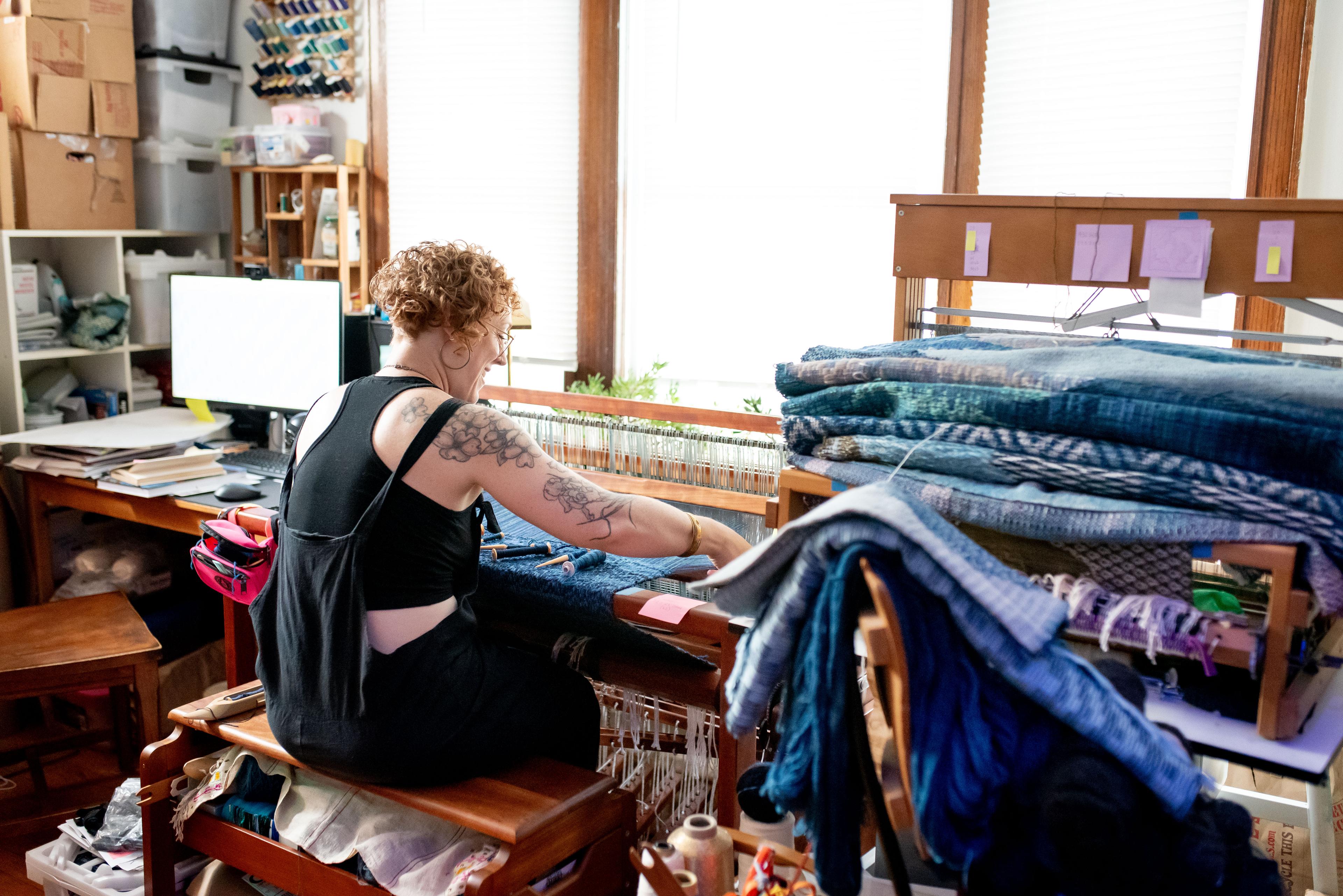
Katie Vota is a Chicago-based artist utilizing traditional textile techniques to create sculptural and woven dreamscapes that engage viewers in ideas of touch, pleasure, and the roles we play in shaping the world around us. Via collecting cast-offs and scavenging colors from nature, she transforms materials to create wholes from smaller parts, finding softness in many forms, textures, colors and patterns based in cloth.
Vota received her BFA from the Maryland Institute College of Art (2010, magna cum laude) and a Studio MFA from the School of the Art Institute of Chicago (2015). She was awarded a US Student Fulbright Grant (’11-’12) to study traditions of Andean Back-strap Weaving and Natural Dyeing in Cusco, Peru, with the Center for Traditional Textiles of Cusco. Vota has exhibited in numerous solo and juried exhibitions, at venues including Threewalls (Chicago), Mu Gallery (Chicago), Pratt MPW School of Art Gallery (Utica, NY), The Krasl Art Center (St. Joseph, MI), The Indianapolis Art Center (Indianapolis), and Ignition Projects (Chicago). She is a Lenore Tawney Foundation Scholar, a Fulbright grantee, and has participated in residencies such as Praxis Fiber Workshop's Digital Weaving Lab Residency, CAC Field Work Residency, Chicago Art Department’s “On Mending” think tank, and Crosshatch (formerly the Institute for Sustainable Art and Natural Design) in Traverse City, MI.
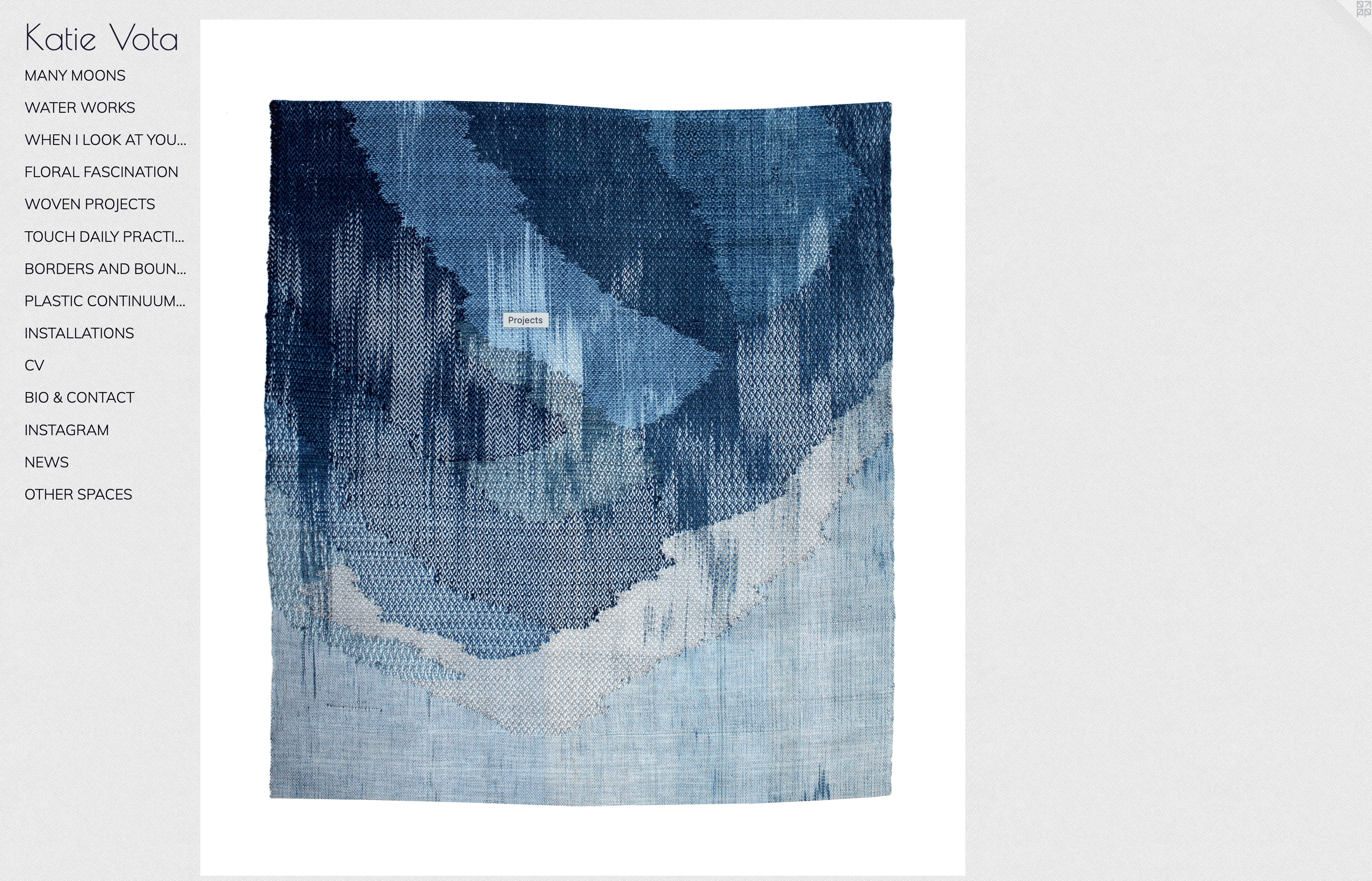
In her newest work, she’s become fascinated with the connection between Indigo (a living color) and water as a living entity. The woven wave-forms and seascapes are loosely based on reality, however, weaving time is spent dreaming of beaches from times past and lost, low-tide walks yet to be taken, Jules Verne-esque adventures under the sea, and the shifting faces of our shores as our climate continues to change. In drafting weaving patterns, she creates her own waves and ripples, sea-foam and bubbles. The deep focus on pattern is akin to a larger observation of the sun sparking off the water, or the moon reflecting its face. As this work progresses, real flotsam and jetsam, tide-smoothed stones, and other found objects are brought in, juxtaposing the beautiful idealization of these images with the lived reality of our polluted water systems. (Text courtesy of the artist.)
OtherPeoplesPixels: Your work exhibits a tension between reality and fantasy, an oscillation between the natural and the alien. I notice references to science fiction in relation to the physical body and queerness amidst ruminations on departure and return. In the past, you were working with clothing as armor, linking these to varying identity politics. Your most recent body of work uses the imagery of the moon, circles, and reflections on the water. Is there a triangulation between cloth, protection, and queerness?
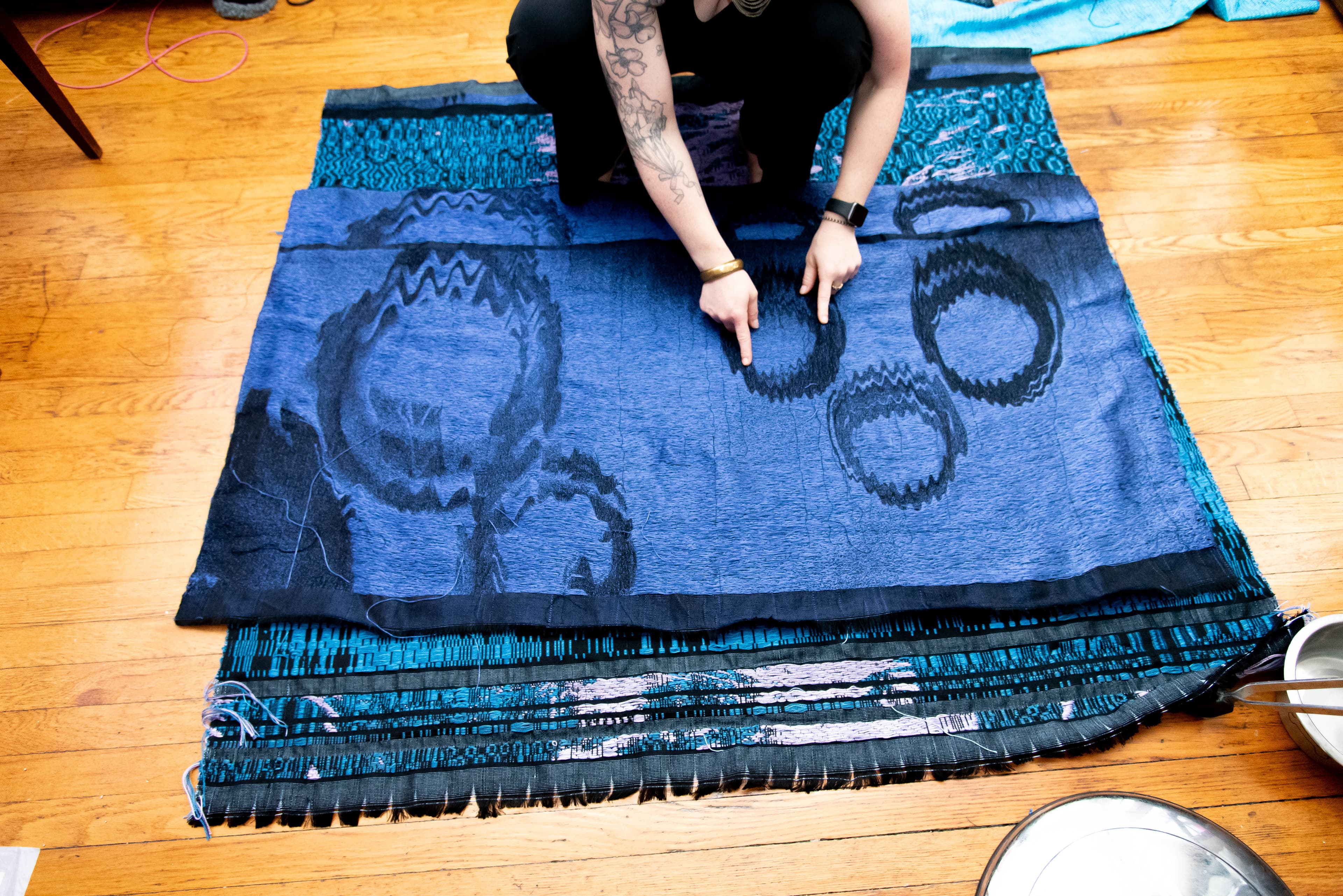
Katie Vota: Definitely. I use the moon as a symbol for the body in change. It's shifting constantly, which feels very akin to the way that I inhabit my body. I have hypothyroid, and every day I have to ask myself, “Where is my body? How is my body today?” I don’t identify as genderqueer but my partner is transgender, and we talk a lot about the dysphoria that comes with never being sure where your body is going to be on a daily basis. These tangents exist within the queer community, but also for anyone just living in the world. Everyone is meeting themselves in a different place every day. It took me over a year of making this work before I realized that that was a significant underlying thread.
OPP: Your weavings seem to hover between pattern and image-making, refusing to commit to one or the other. What is your approach to creating this balance, and is there a particular ratio that you're striving for between the two?
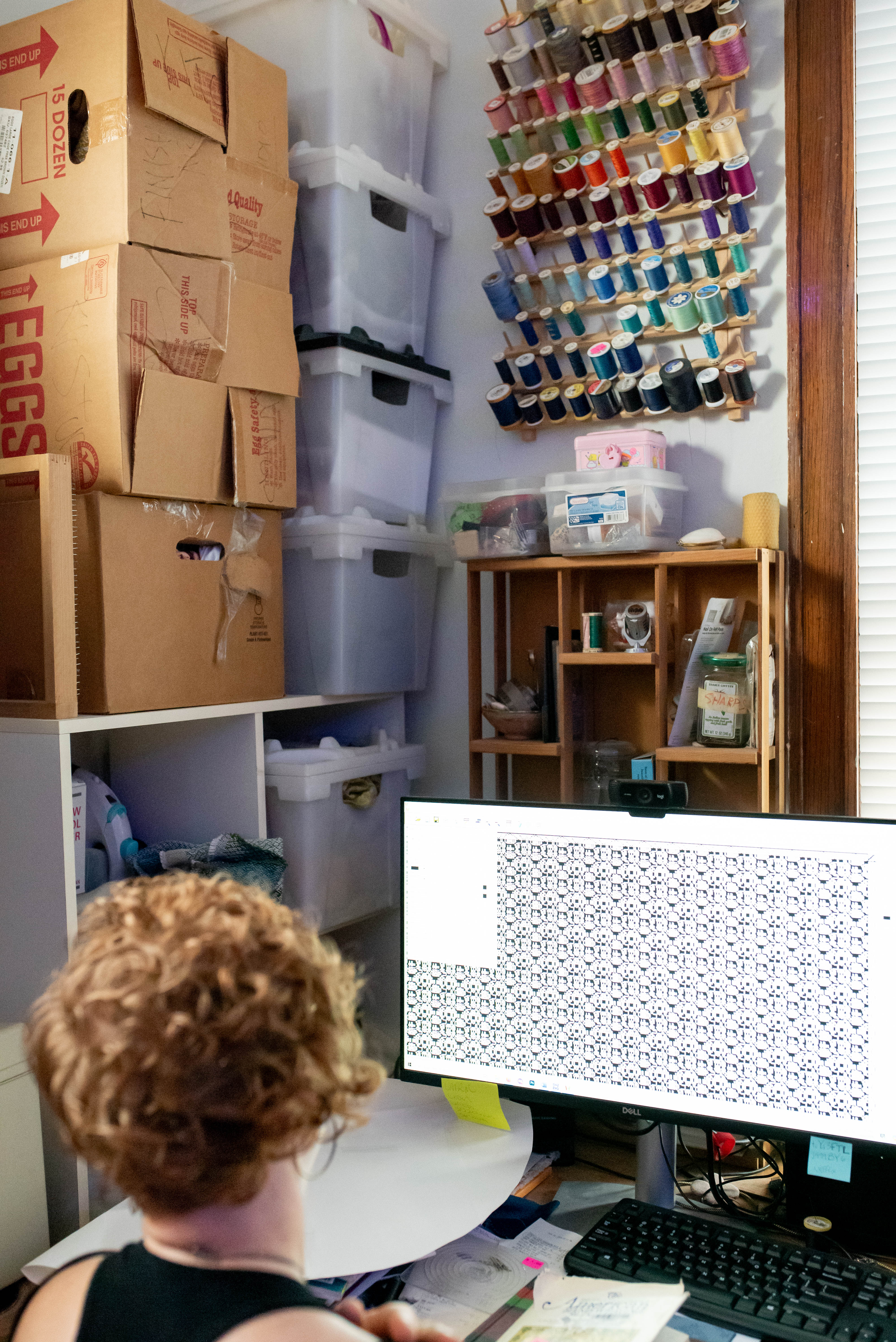
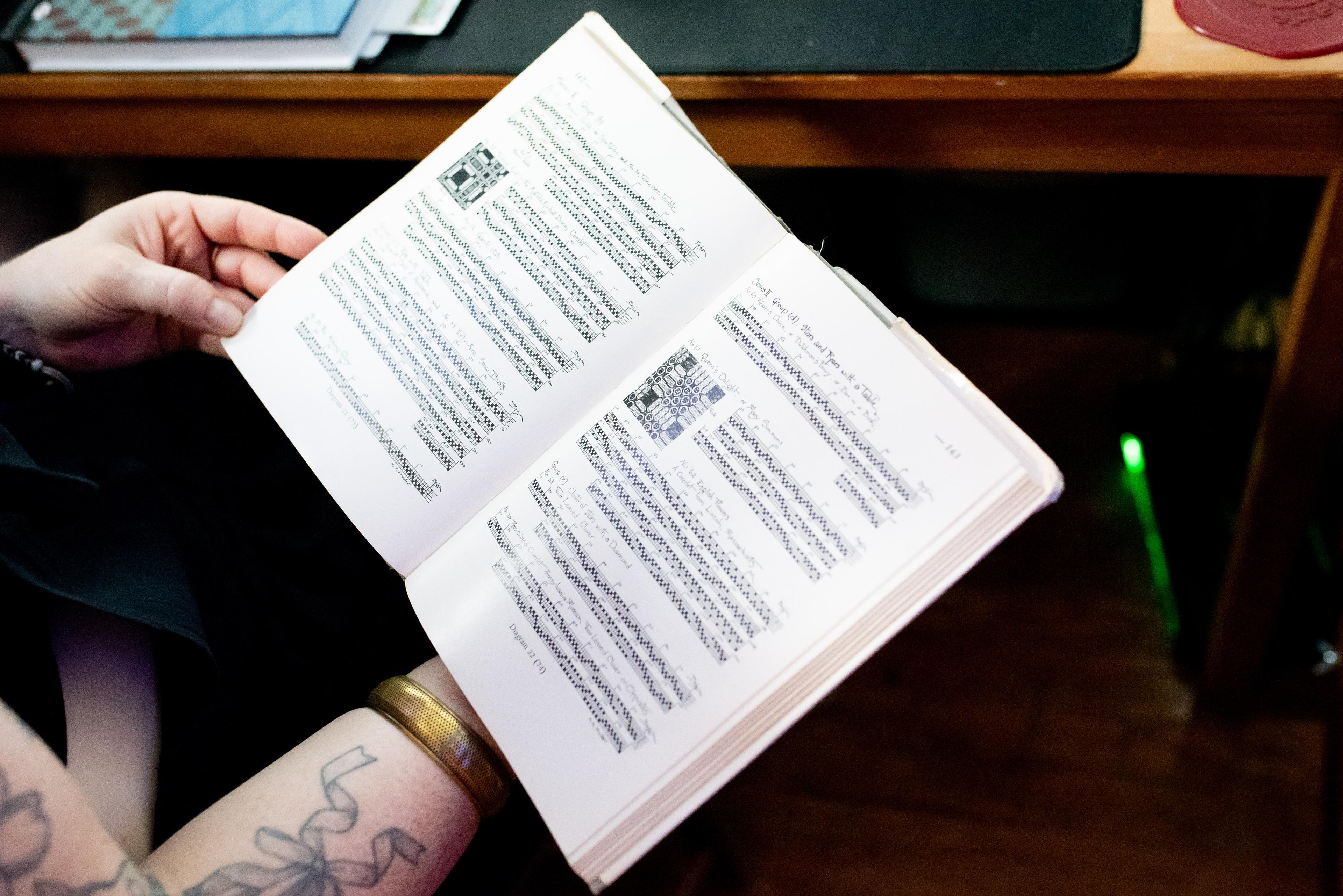
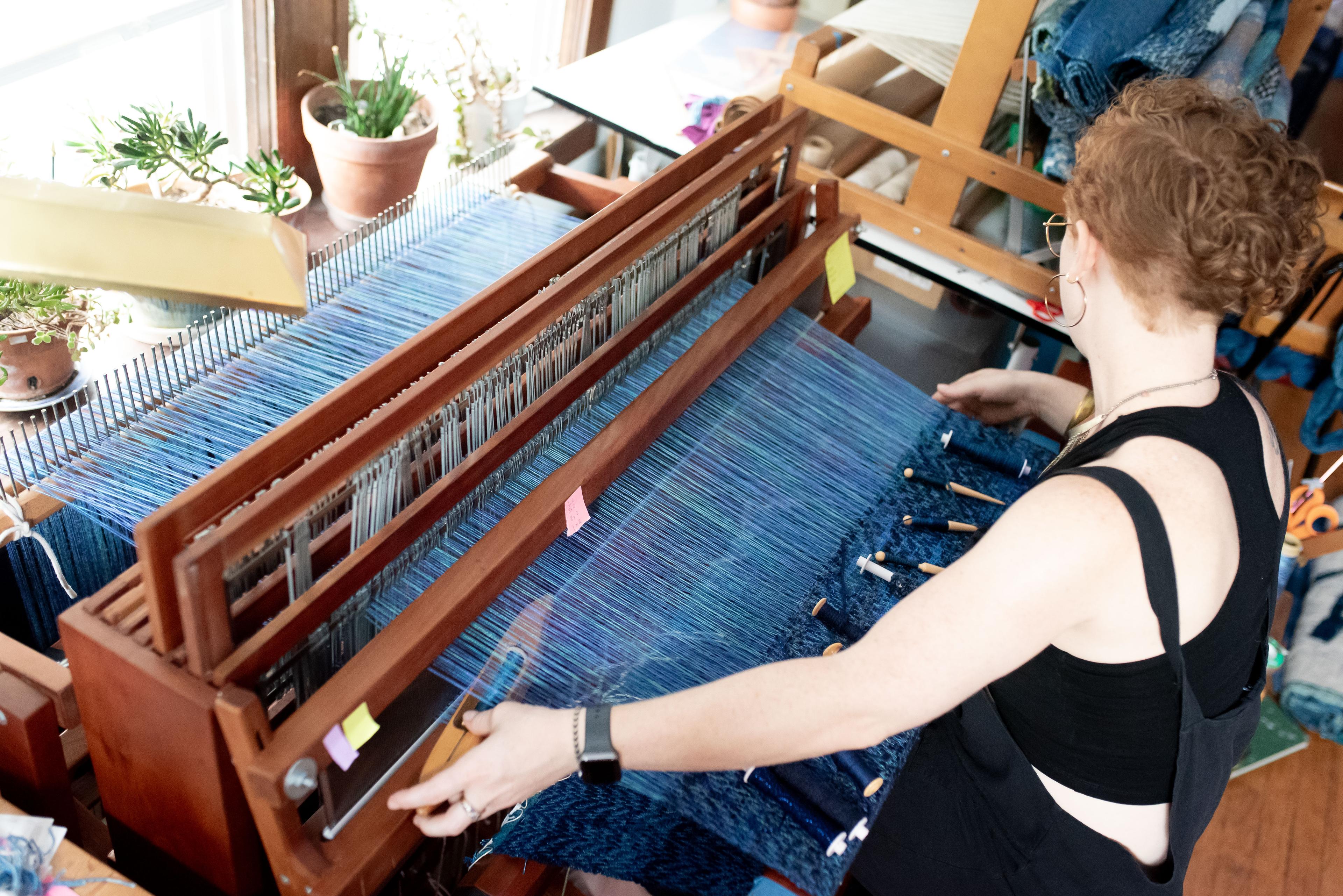
KV: I started by referencing Marguerite Davidson’s “A Handweaver’s Pattern Book,” which groups patterns into families in a way that I have never seen another book do. Using this as a model, when I’m finished with the threading and tie-ups, I’m free to move between several unique patterns by just changing the treddling. Moving to a larger loom meant I had to learn to draft, as there were no 8 shaft books like what I was used to. I started by hand and then very quickly moved to drafting with Weave-It, a computer program that really streamlines the process. It has allowed me to approach drafting in the same way this book did, working on related pattern sets I can move between. Most of the work I’m doing now involves the hybridization of Compound weave structures, such as Overshot, Crackle and Summer and Winter. Visually, they all rely on large, expressive patterns, most of which are heavily derived from nature, and once I’m set up I can basically hybridize an entire family, moving from one type to another.
At this point, I think about weaving as drawing and not necessarily as cloth making. I set myself up with very loose parameters rather than designing an intricate cartoon and following it to the letter. I begin with making little thumbnail drawings, which are translated to post-it notes and stuck to my loom, and then I just get to play! I can have upwards of fifteen separate patterns that I’m working with at one time!
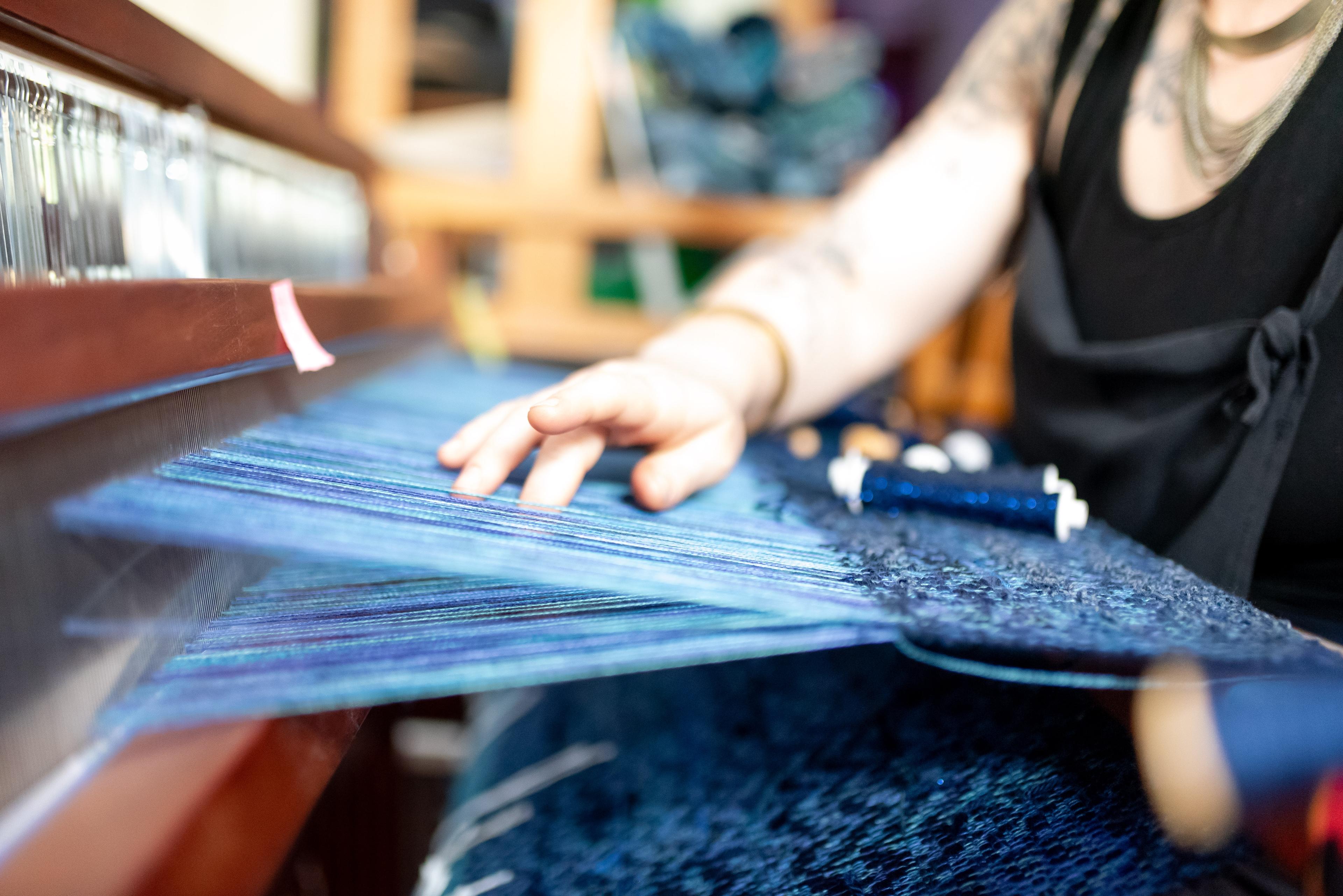
It's a balance between order and chaos, and the weaving never quite turns out the way I anticipate. For example, Egg Moon (working title) was made with this beautiful, extremely round template that I was so proud of, but then it stretched and was no longer perfectly circular. Initially, I was frustrated but the stretch allowed more space for the pattern to come through, which is interesting given my dual obsessions with drafted patterns and image-making.
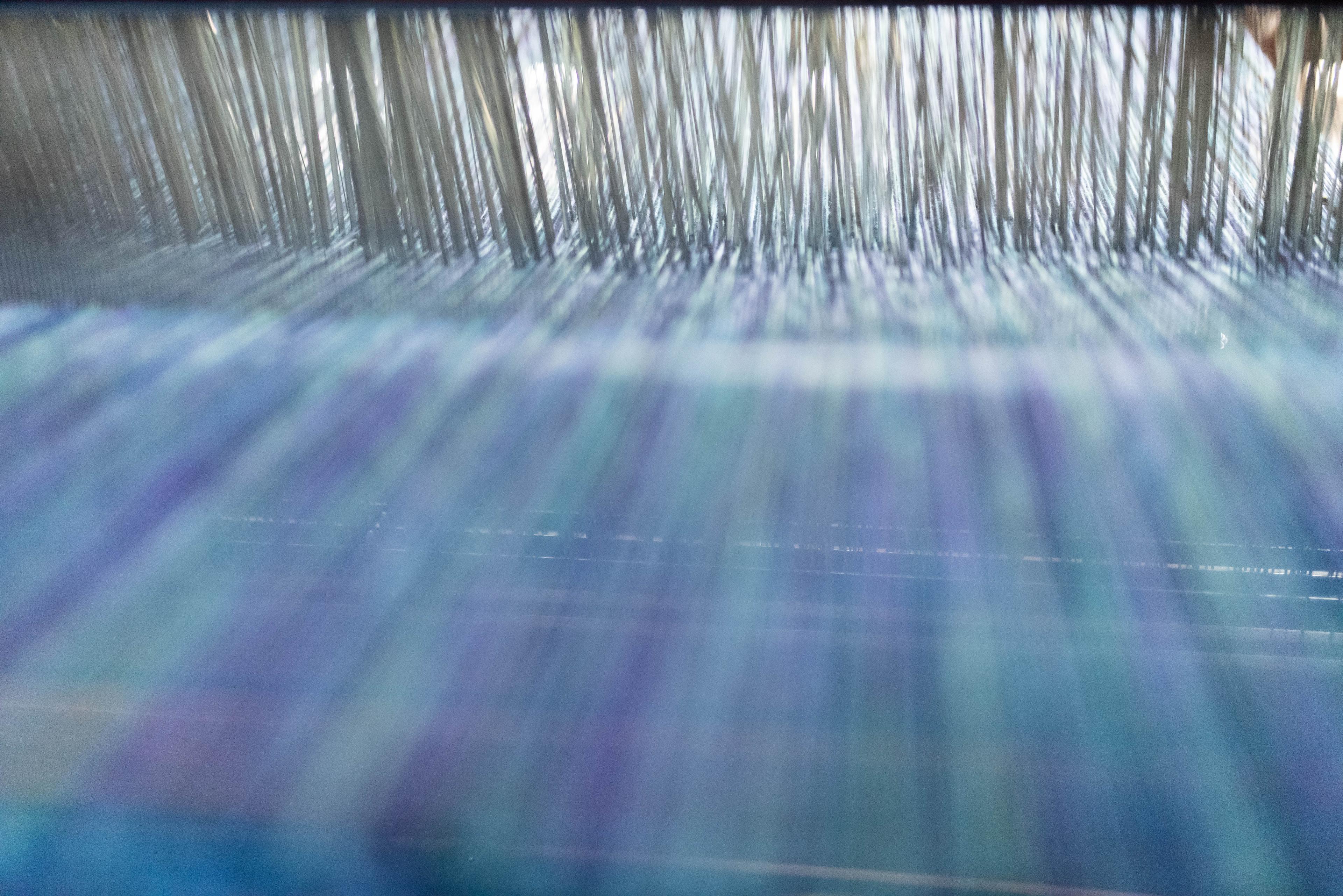
OPP: The act of weaving and the resulting object feel very akin to a creation myth, like you're making something out of nothing. Is there anything metaphysical in the process for you?
KV: This is one of the things that drew me to textiles in the first place. There are all these wonderful inferences between lived time and cloth. It's worn on your body, you use it to get your groceries, and you snuggle into it on your bed. It was also such an early development in human history, and I think people realized that it was important in that way.There are a ton of creationist mythologies that are based in textiles, and we are constantly making connections without realizing it.
OPP: You were awarded the US Student Fulbright Grant in 2011 to study traditions of Andean back-strap weaving and natural dying in Cusco, Peru. Was this your first encounter with indigo and other natural dyes, and how has that experience shaped your work?
KV: It was not my first experience with natural dyes, but it was the first time I spent a lot of time working with indigo, which has since become an essential part of my practice. When I was an undergraduate student, I became interested in the idea that both cloth and color can come from a plant. Natural dyes weren’t yet a regular part of the class curriculum like they are today, but I was able to get my hands on this collection of old, rather disheveled notes from an instructor who went to Cranbrook back in the 1970s. I was also given an out-of-print weaving book by Jenny Dean, who's a British dyer who has roots in British and Scottish weaving traditions, and a box of old dye. They set me loose to experiment with very little instruction, and I just had to figure it out for myself!
Since then, I’ve learned a lot about how natural dyes are not actually sustainable in any way, shape, or form. Realistically, there is no safe or effective way to dye anything without a good amount of waste. Even natural dyes require a salt mordant, which depending on who you talk to, goes right back into the water system. There is also the fact that we are sourcing them from all over the world, as if it is the early 1800s instead of 2024.
In Peru, the process is far more harmonious. They pull all their material from the world around them. Part of this is born out of the lasting legacy of the Shining Path and the cocaine trade. Shipping is extremely difficult, so importing and exporting raw chemicals is essentially out of the question. Indigo production in Peru is therefore extremely natural. First, they grow the indigo plant which then goes into these large, shallow concrete pools called fermentation vats. After the leaves ferment the resulting green matter is scraped out and dehydrated into pigment cakes, which are sent up into the Highlands for the natural reduction process which uses fermented urine. I was actually able to visit this area, where I found out the urine is simply supplied by the male workers. Harmonious indeed, from start to finish!
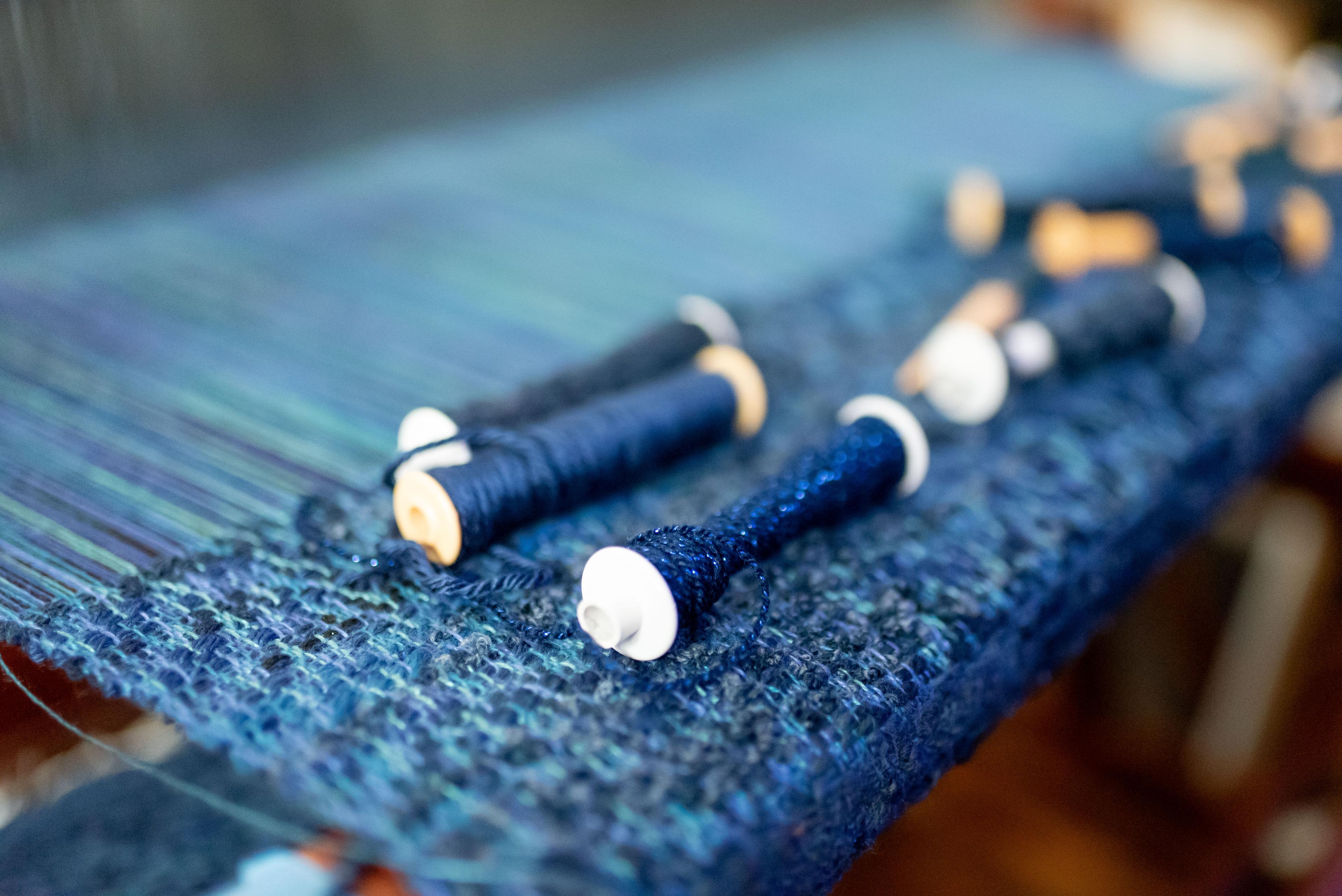
OPP: You describe indigo as a ‘living color’. What do you mean by this?
KV: I currently have a synthetic indigo vat that lives in a pot in my pantry. It doesn’t take up a lot of space and is fairly easy to maintain. People like to joke that they buy bananas to feed their indigo, but that's pretty much how it works. You keep it in a nice, warm spot, monitor its pH, and feed it sugar every so often. It feels very much alive! Lately, I’ve been thinking about how water-intensive most of the natural dyes are. I’ve lived in Chicago for a long time, and I realize that water is a huge part of our lives from the way we move around the city to the way we spend our summers. There is so much about the indigo, its suspension in water and the way one tends it and cares for it, that feels really grounded in this place in which you have water to steward.
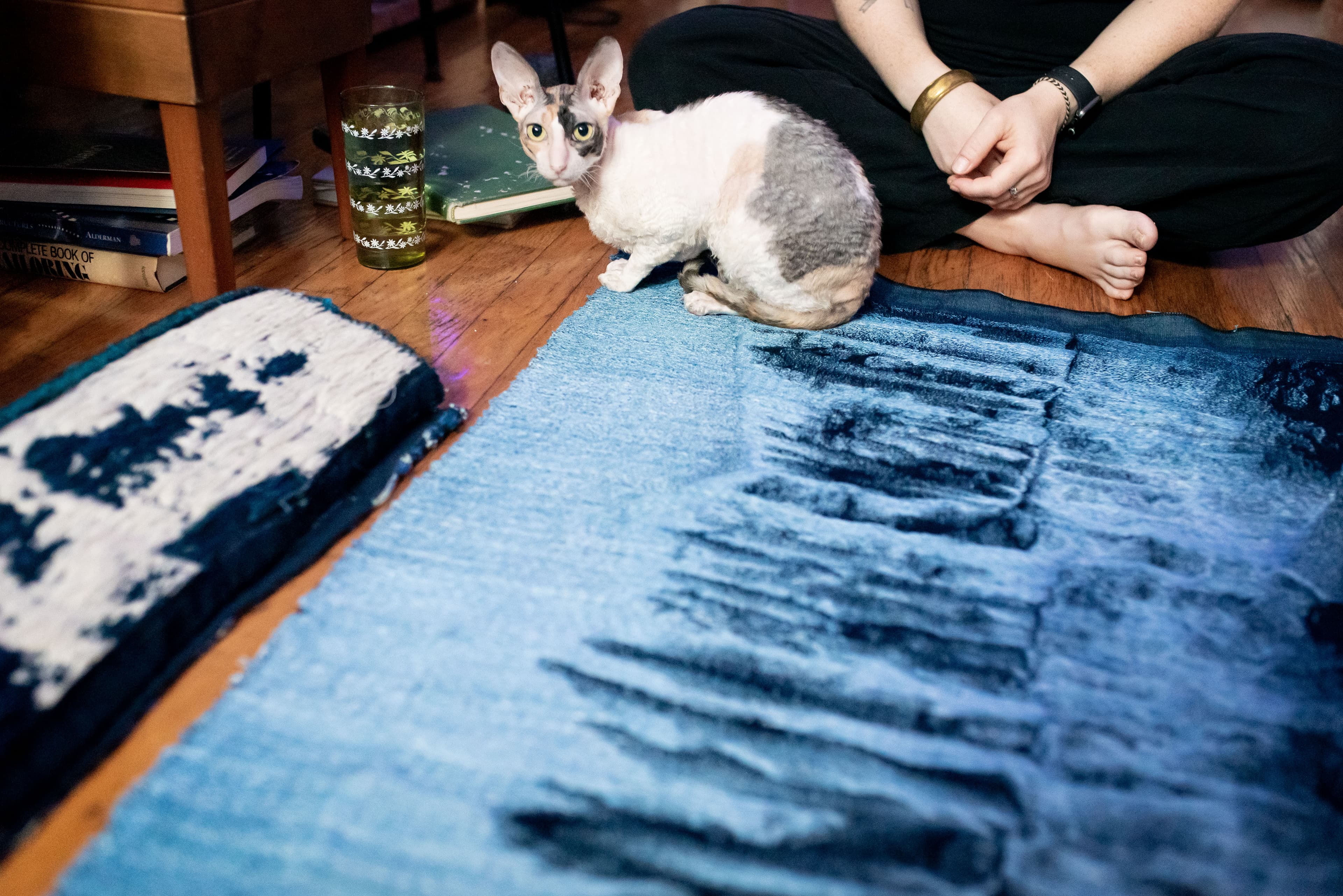
OPP: Some of your work is a reflection on environmental catastrophe, taken from images of disappearing glaciers and masses of garbage floating in the ocean. How do you contend with creating these landscapes or vignettes that are imagined or even idealized amidst the heartbreaking realities of the climate crisis?
KV: It's really hard, and I can get really sad about it. I’m not necessarily capable of impacting the meaningful changes that we need as quickly as necessary, but you can't take away the hope of being able to make change as an individual. I've always been an avid reader of science fiction and fantasy, and it helps me think about the dichotomies of utopia and dystopia and climate sci-fi and idealized worlds. I’m inspired by the way writers will take visions of what the future is all the way to their fullest point. Sometimes it brings us out on the other side, and sometimes it doesn't.
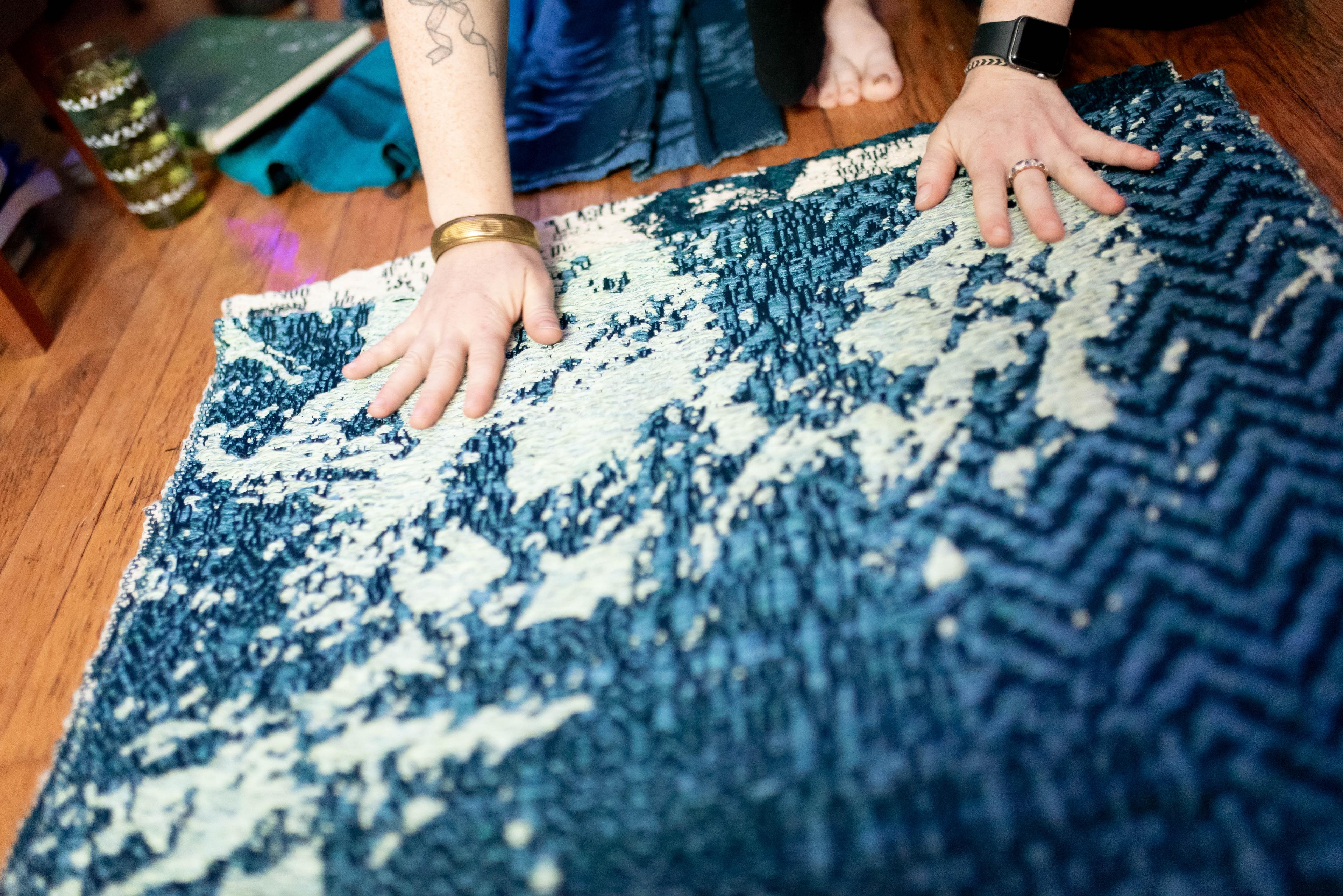
One of the other things that I tend to employ in this work is beauty as a tool for change. People either love this word or hate it, and most of the hardcore theorists’ views on beauty are centered in modernism. I think we can just skip all of that. It's 2024, and the planet is on fire. Recently, I've been finding pictures from the Great Pacific Garbage Patch and turning them into old school tapestry style images. They are lovely and elevated but also dissolving in the same way that plastic is dissolving in the ocean.
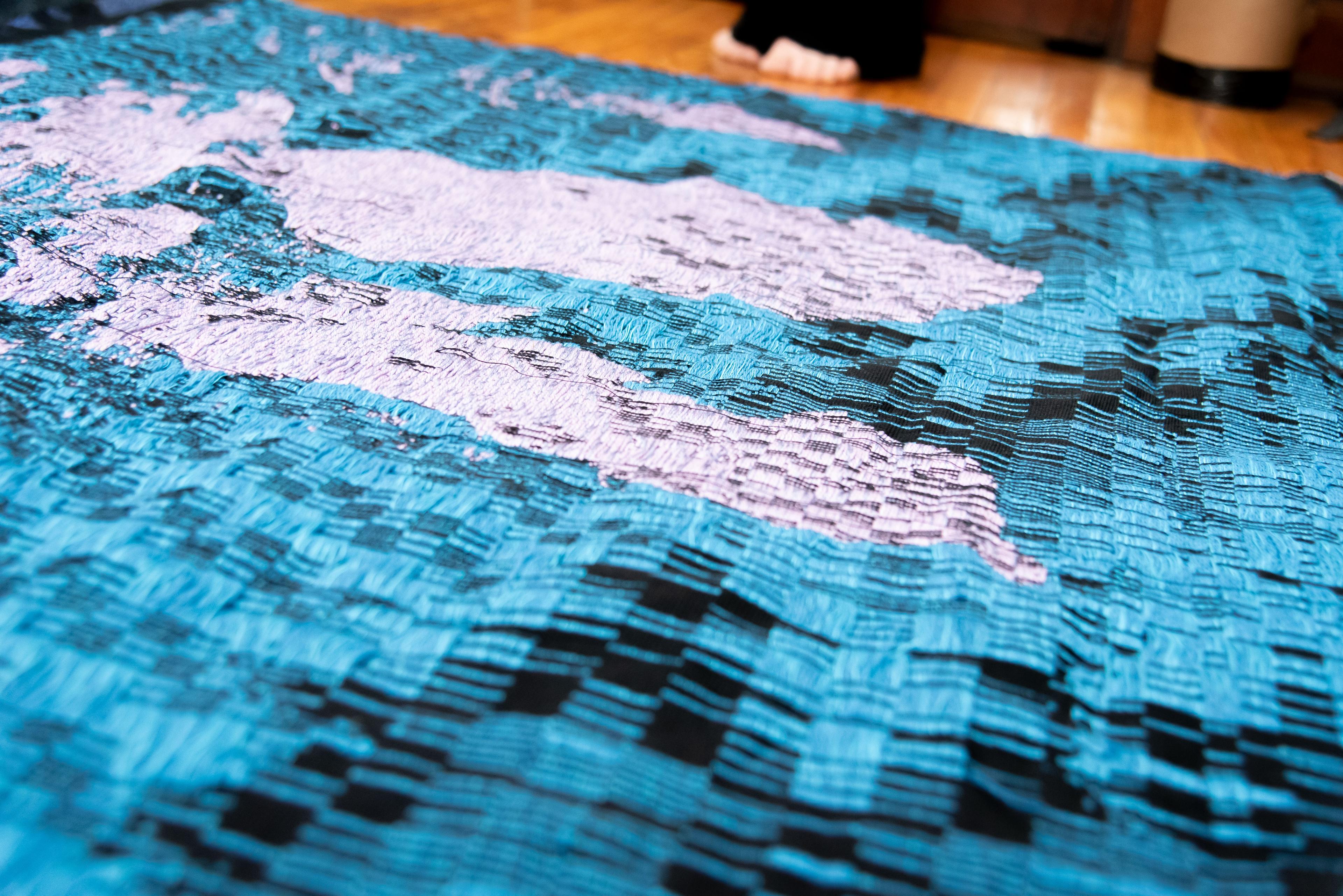
OPP: Would you talk about your ideas around scavenging as self-preservation, and the ways in which you engage with your community when sourcing material?
KV: Scavenging as self-preservation was something that started as a thought during the pandemic. I would take walks and pick things up, often dye materials like flowers and leaves. Scavenging also shows up in how I source materials for my weavings, which use a lot of found yarns. I'm on the board of The WasteShed, and it's so nice to be able to have a place where you can find little bits of things that are right for what you're doing.
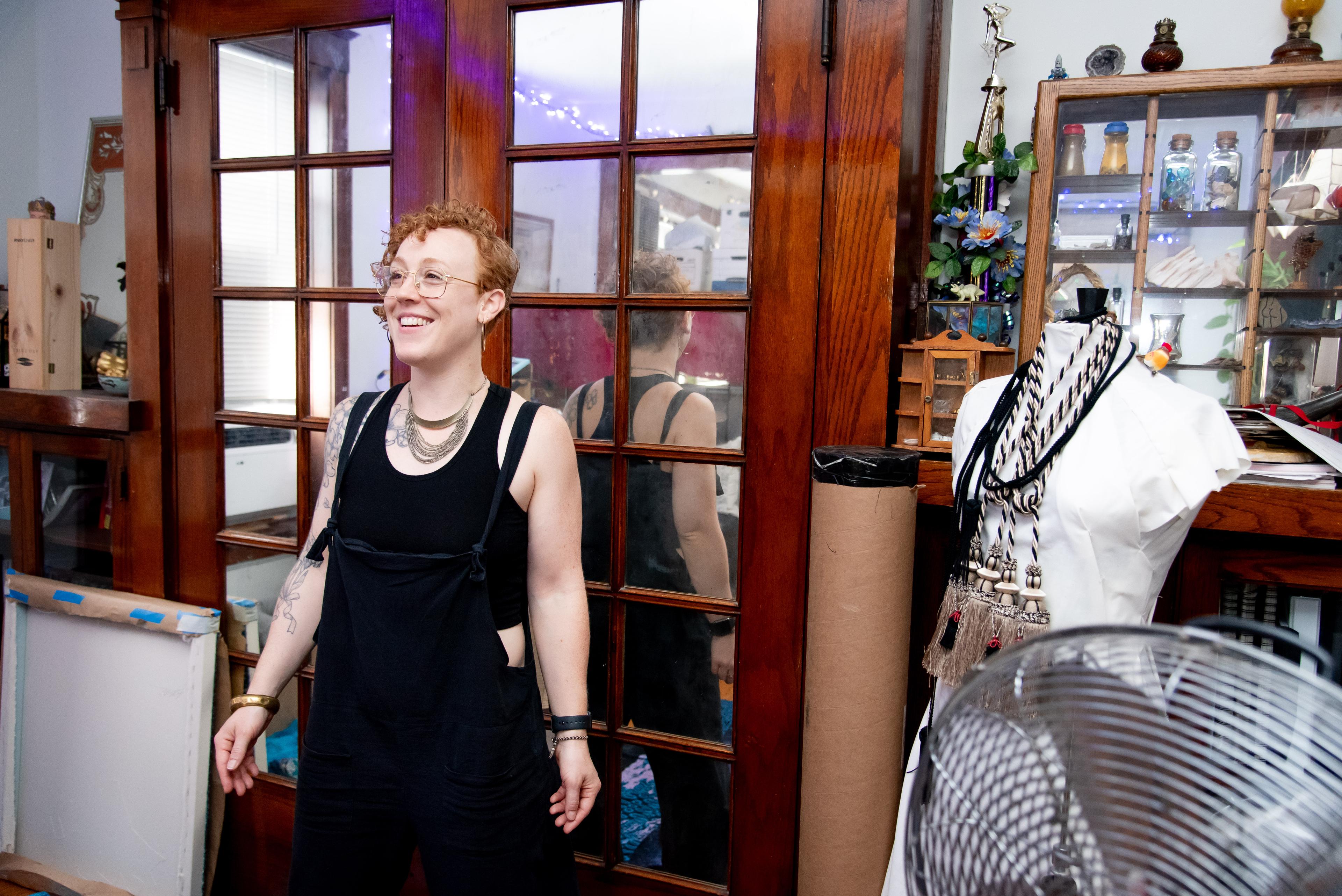
Before the pandemic I was doing mobile mending workshops and clothing exchange pop-ups. I’ve recently restarted a clothing swap, even though some of us who are more COVID conscious are still a little hesitant. I’m also working with The Parlor by Trash People, which is based out of Logan Square. They basically function as a mutual aid hub for nonprofit organizations around the city. These types of spaces are also incredibly important to living in a more symbiotic way in the world. Even within the arts community we can share material resources and find ways to help one another.
To see more of Katie's work, please visit www.katievota.com.
Featured Artist Interviews are conducted by Chicago-based artist Lillian Heredia. When she’s not creating for OtherPeoplesPixels, Lillian makes work that grapples with past experiences with religion, sustenance farming, and motherhood through the lens of her background in biology. Her work has been shown at The Ukrainian Institute of Modern Art, SAIC Galleries, Woman Made Gallery, The Martin, Purple Window, SITE Galleries, and Circle Contemporary. She received a Bachelor of Science in Biology in 2011 and recently completed a Bachelor of Fine Arts at the School of the Art Institute of Chicago with an emphasis in sculpture. Lillian is a recipient of the Presidential Merit Scholarship and has been a finalist in the Pinnacle Awards and the Documentary Family Awards. Her work is currently featured on Comfort Station’s Artist to Watch series.