Chelsea Bighorn
June 18, 2024
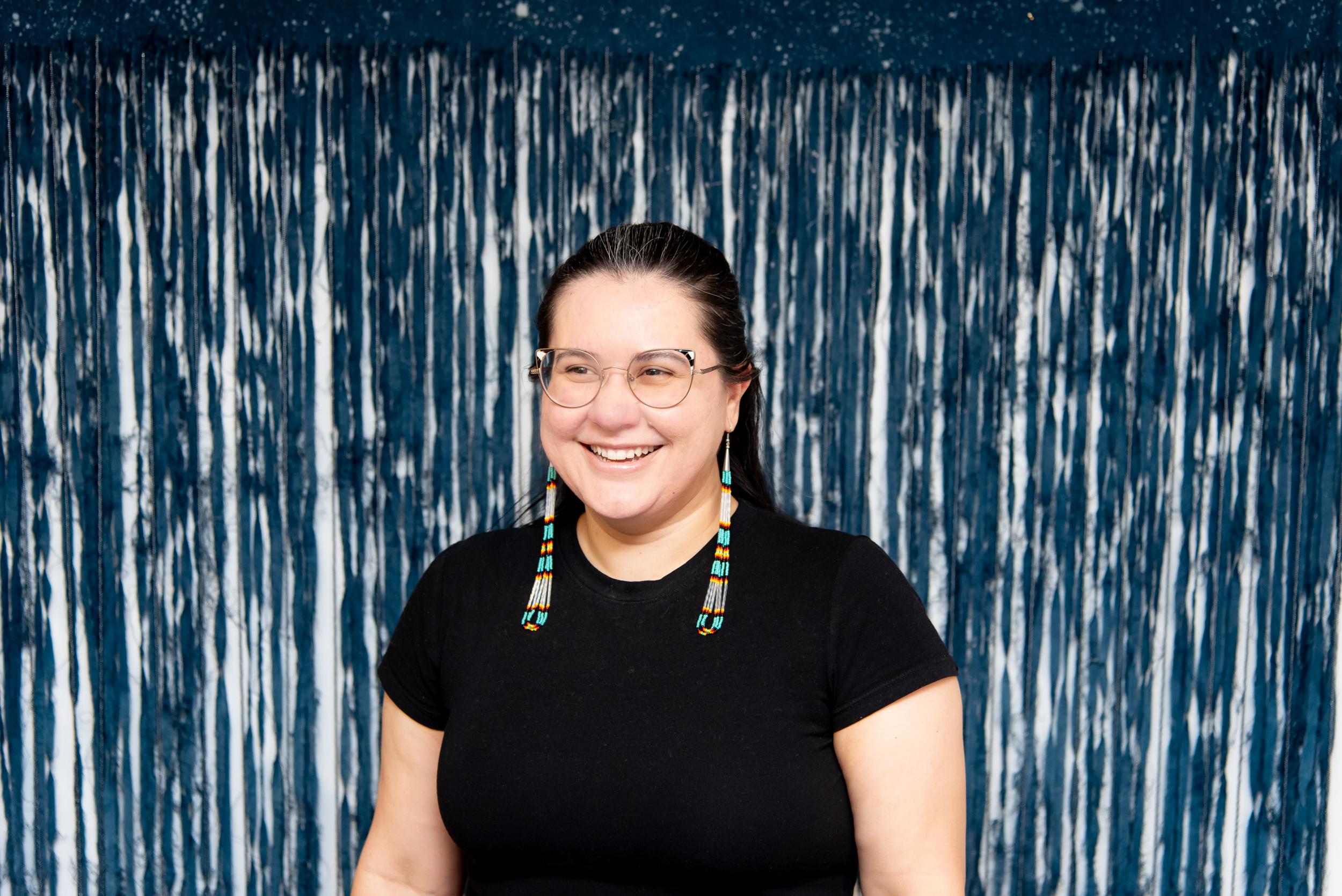
CHELSEA BIGHORN’S work reflects on the tension and balance between her Native American heritage and Catholic upbringing, acknowledging the difficult history between the two cultures. Bighorn was born and raised in Tempe, Arizona, and her tribal affiliations are the Fort Peck Assiniboine and Sioux tribes from Montana and the Shoshone-Paiute from Northern Nevada. She graduated with honors from The Institute of American Indian Arts in 2021 with a Bachelor of Fine Arts in Studio Arts, and recently completed a Master of Fine Arts in Fiber and Material Studies at the School of The Art Institute. Bighorn has shown her work at the Museum of Contemporary Native Art, SITE Santa Fe, The Balzar Gallery, and EXPO Chicago, and is a current artist in residence at the Chicago Artist Coalition.
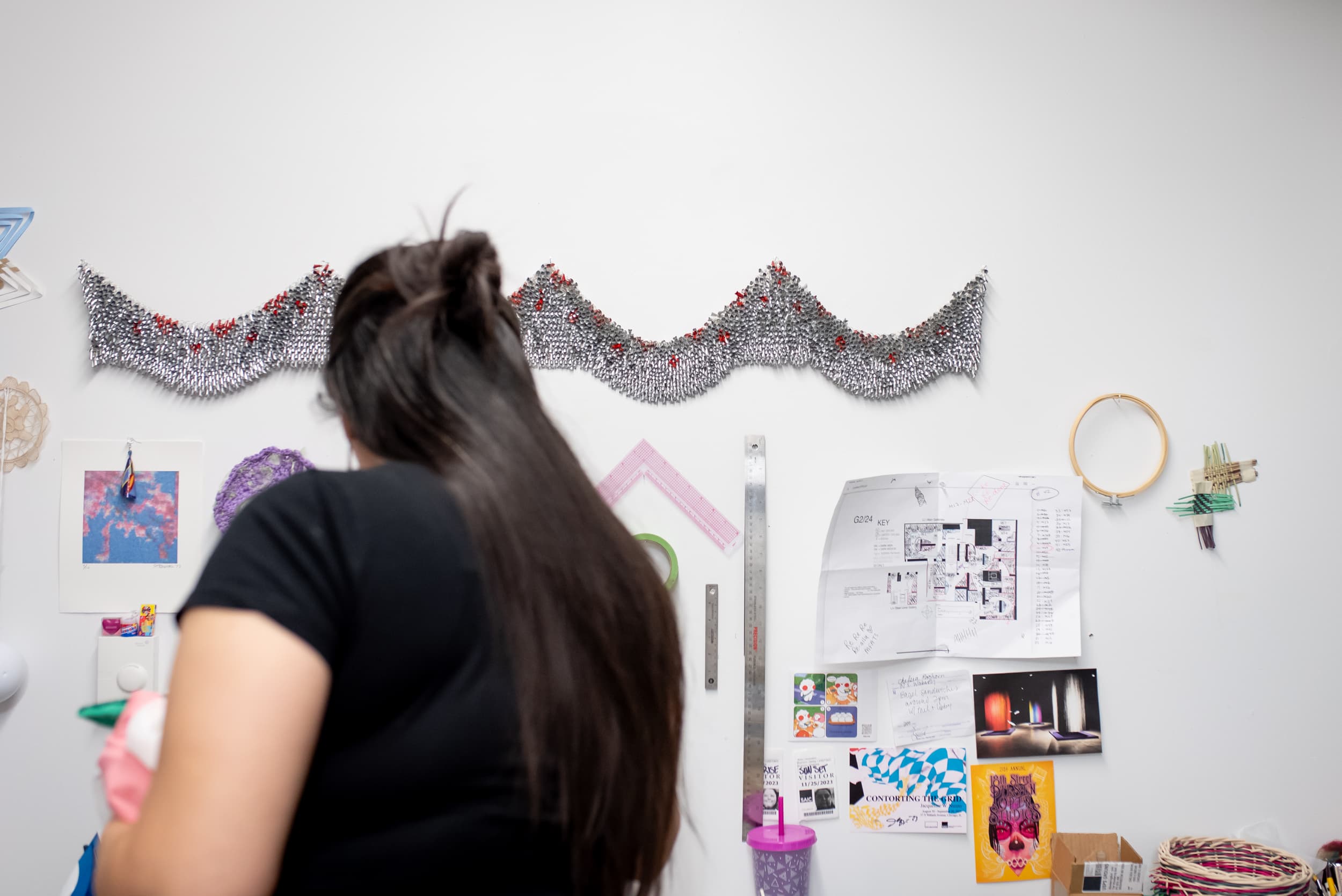
At the time of our meeting, Chelsea Bighorn is in the midst of a flurry of activity. In her studio, she is simultaneously preparing work for EXPO Chicago and her MFA Thesis show. Chelsea seems to be catching her breath as we settle into the space. Despite her densely packed schedule, she acknowledges it is a poignant time for pause and reflection. I am immediately struck by the similarities between the artist and her art. As we explore the space and begin our conversation, I find myself adopting Chelsea's unhurried demeanor and admiring the way she lovingly handles the monumental fiber sculptures that surround us.
OtherPeoplesPixels: Much of your work is about finding balance and harmony in the midst of tension. Could you talk about how this relates to your identities as both Native American and Irish Catholic?
Chelsea Bighorn: I have family members who survived boarding school, and I was raised Catholic. I’m only here because of what happened with the Native Americans within the Catholic Church. I’m a product of that, and it creates a tension within myself. It was a weird situation growing up, but as I got older I started to focus more on the things that kept my interest while I was attending church services.
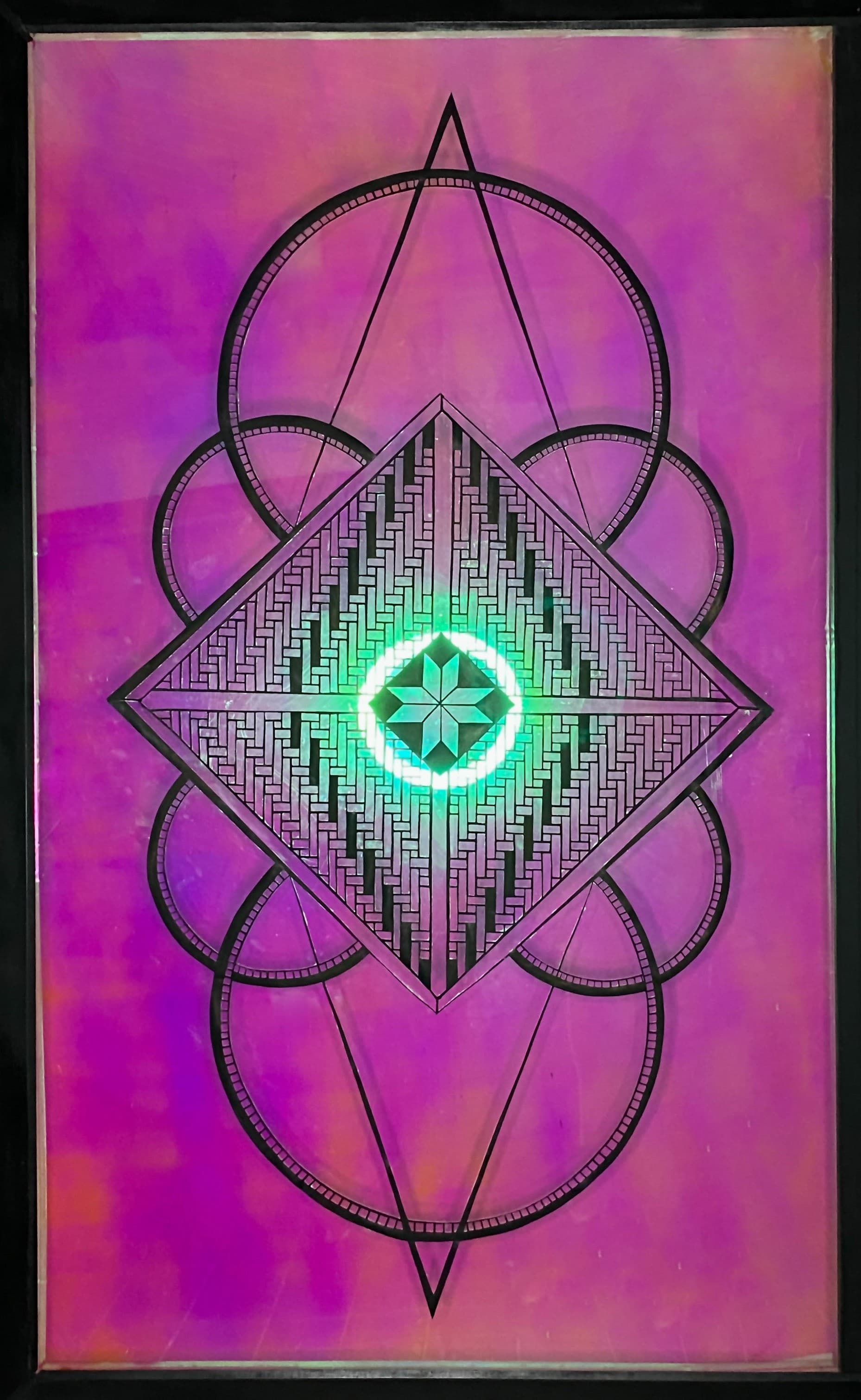
Ultimately, it came down to the iconography and imagery. I’ve always been fascinated by stained glass windows and the history of them being a visual representation of events for people who couldn't read. I'm also really drawn to geometric work which plays a big role in Native American design. I started to play around with these two things during my BFA thesis work, and I came up with the idea of making my own stained-glass windows. This was during COVID and I was locked up in my apartment, so I worked with paper which is accessible and easy to handle. I began using my family archive of designs from clothing and moccasins as well as other Lakota Dakota historical designs to create my own narrative and story for these stained-glass windows. It was a really nice way to put my own spin on something that I had been surrounded by for so long.
OPP: I’m thinking about coding in relation to both the stained glass windows and the geometric designs. It seems there is yet another source of tension here in terms of the audience's ability (or inability) to decipher meaning. How comfortable are you with that potential for mystery in your work?
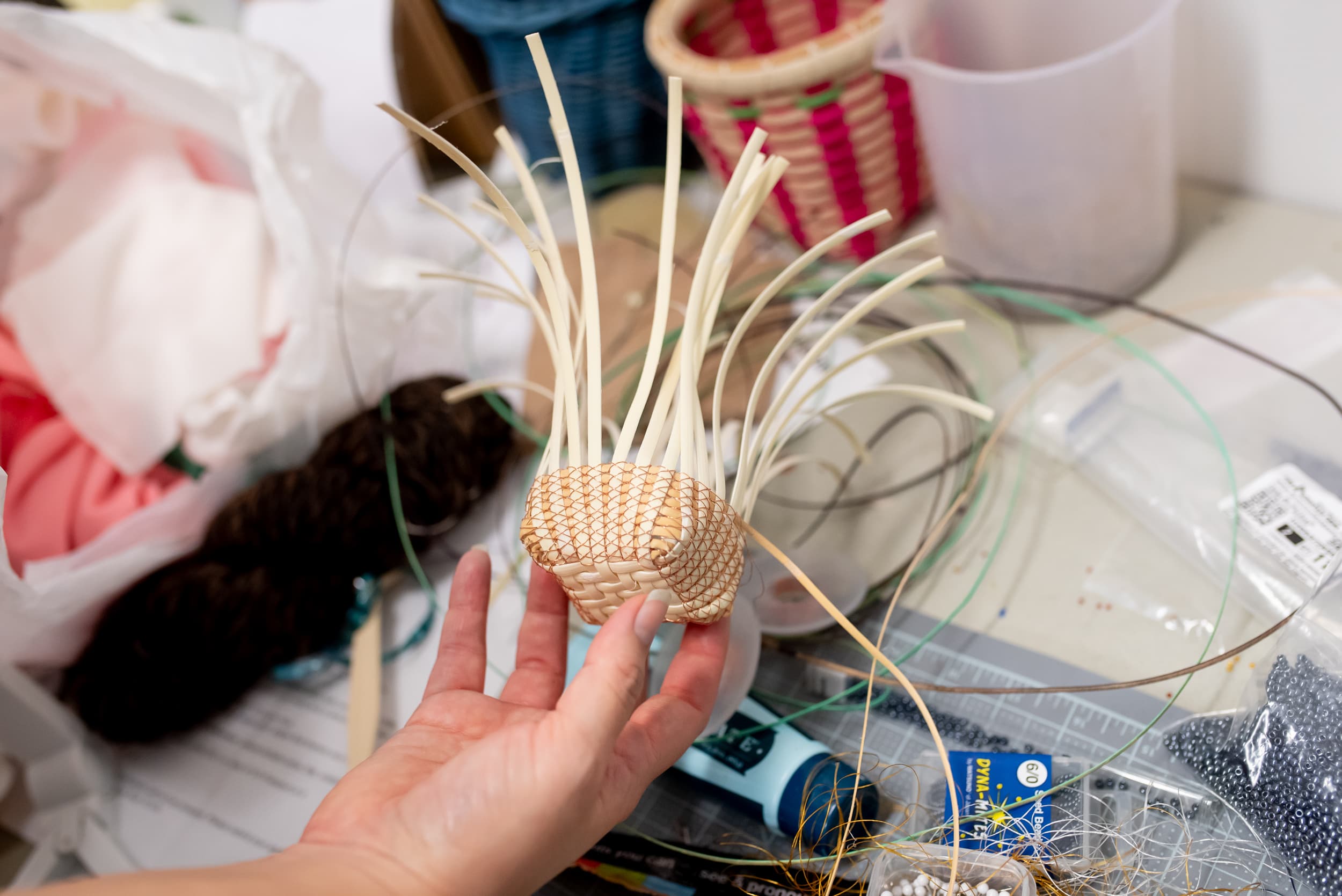
CB: I think a lot about who has access to this visual language that I'm using, and I really enjoy using that in my work. Not so much yet in my textile pieces, but in my paper work it happens quite often. Specifically, I'll use the cross motif which is a nod to my grandmother and the moccasins she wore. Other times I’ll reference the weaving pattern of a specific basket. The work’s exact meaning or context is there to decipher, but not for everyone. It’s a nice little secret.
OPP: We're talking a lot about the paper cutout techniques, which sounds like maybe it was born out of necessity, but there's also the fragility of the paper involved. Then we see a move to canvas, which is pretty durable. What has that transition in material been like for you?
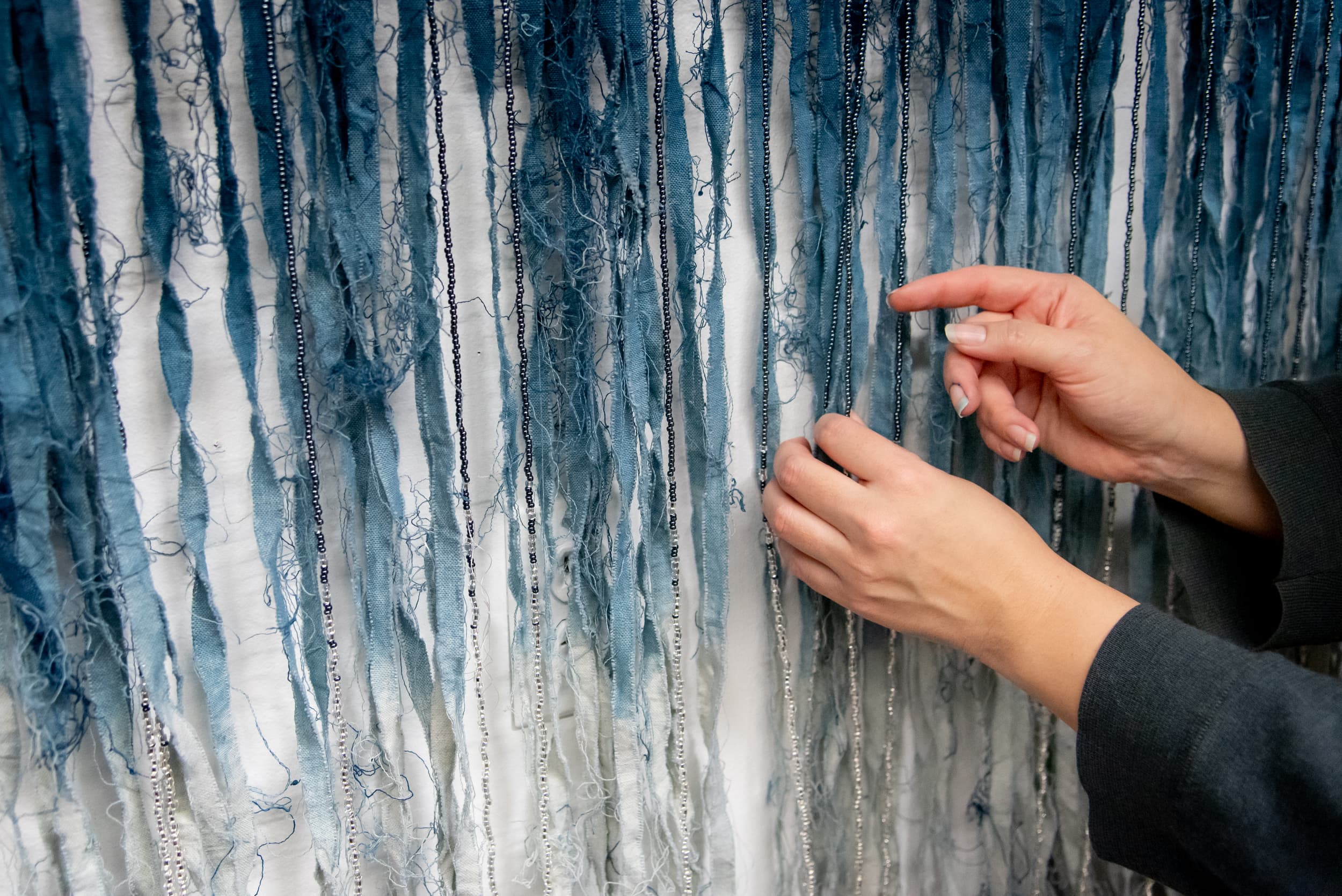
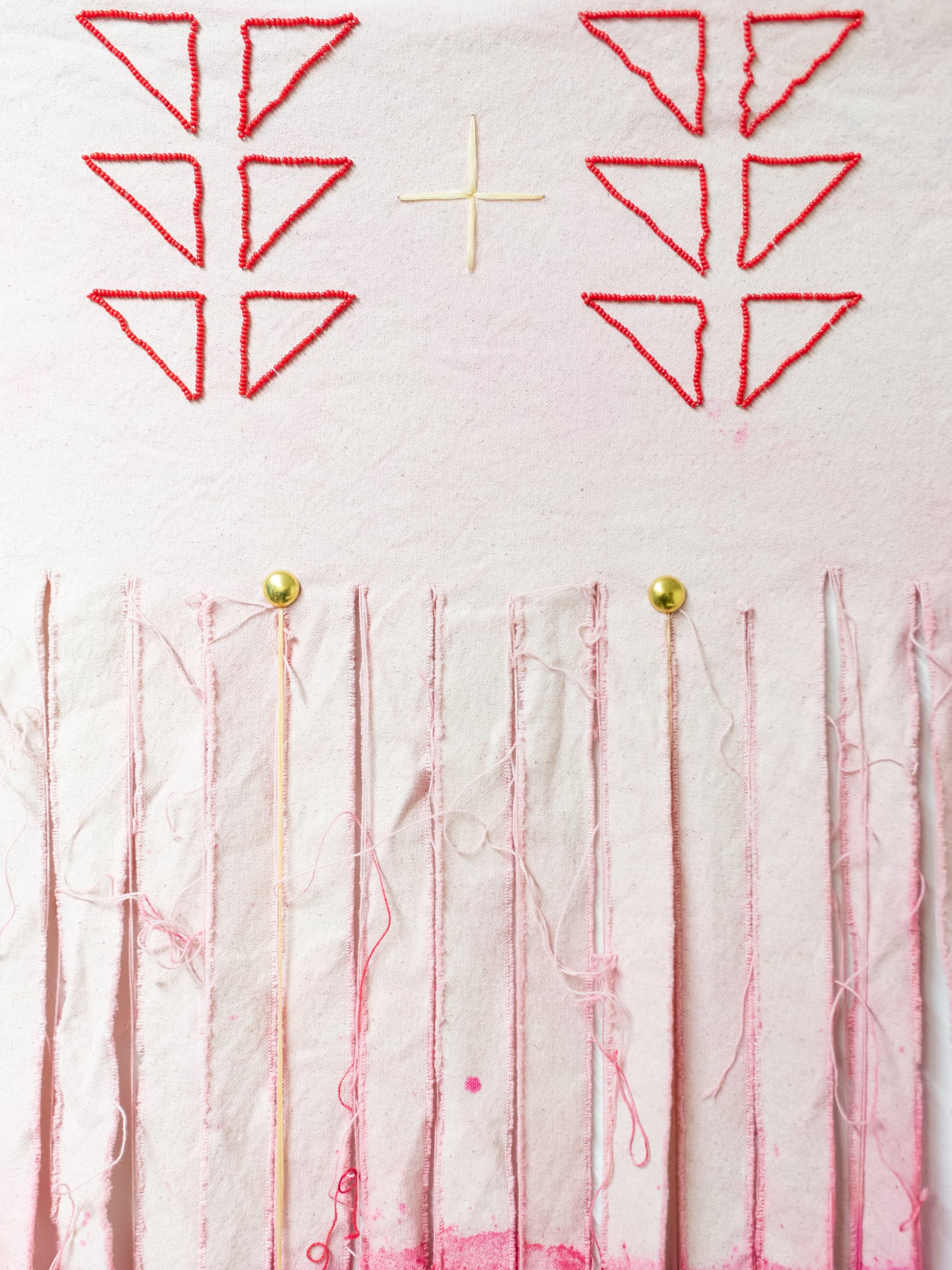
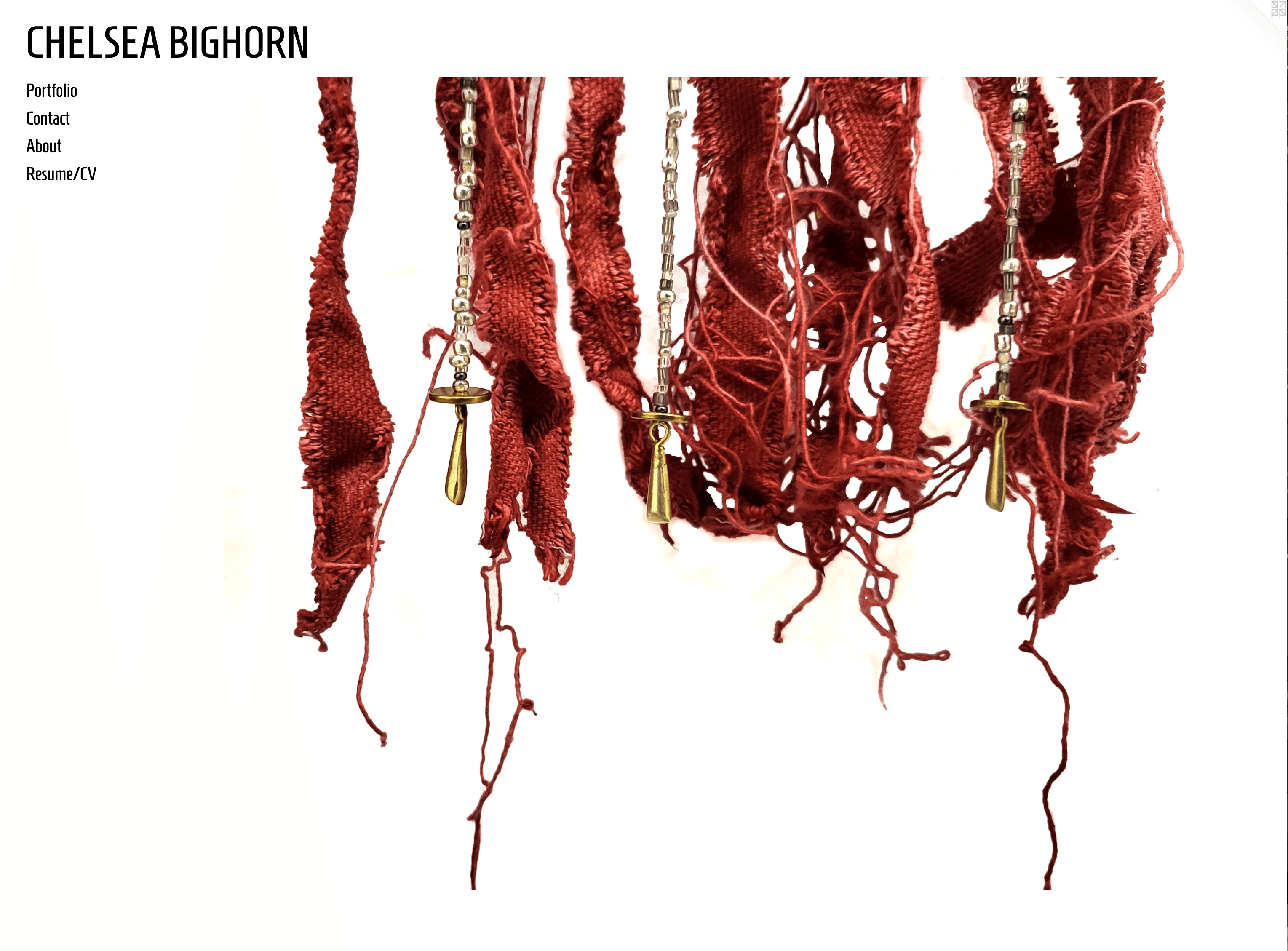
CB: With my paperwork everything has to be planned out and extremely precise. If the designs take away too much of the paper it will simply fall apart. I got into canvas while I was taking a dye class. At the time I was doing research on war shirts or scalp shirts, and they are made with this really stunning fringe of human or horse hair. I became interested in how that could be translated to cloth. It's also a good way to loosen up. I create the fringe prior to the dying process, and I like how regardless of how precise the measurements and cuts are it still just kind of does what it wants to do. It frays and twists, and I have to give up control–which is nice because I am often told my work is very tight.
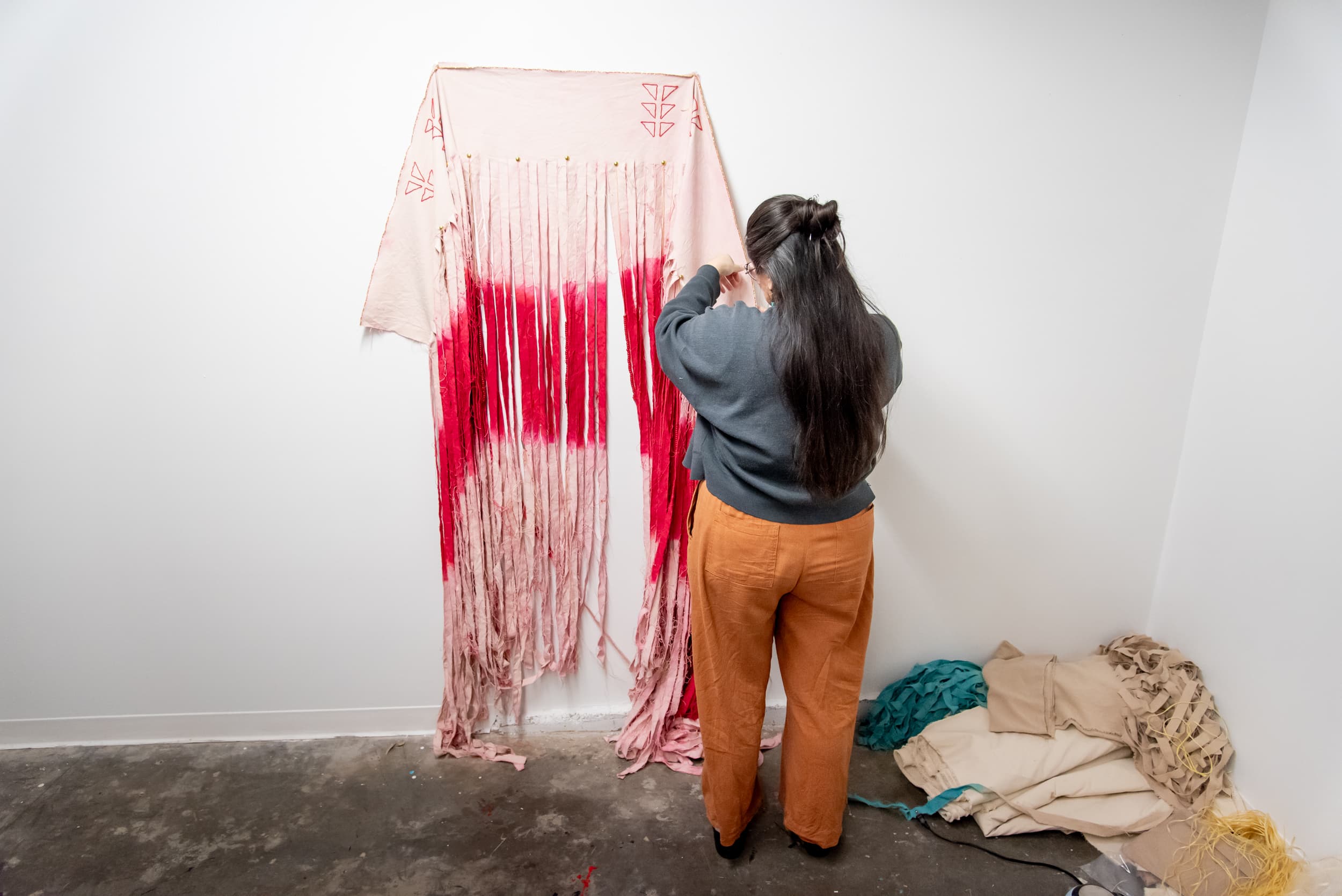
OPP: The dyeing comes into that in a really beautiful way. There's an alchemy to finding just the right dilution or an exact hue, but there is also a lot of luck or chance involved. I'm also struck by the connection between the dipping method you’re using and the spiritual role of water.
CB: There is something cleansing about it, and there’s a familiarity, almost like it's storing a story or a memory. I’m intrigued by the way the dye washes out or clings onto other pieces. Often I have to dye things twice because the outcome is so unpredictable.
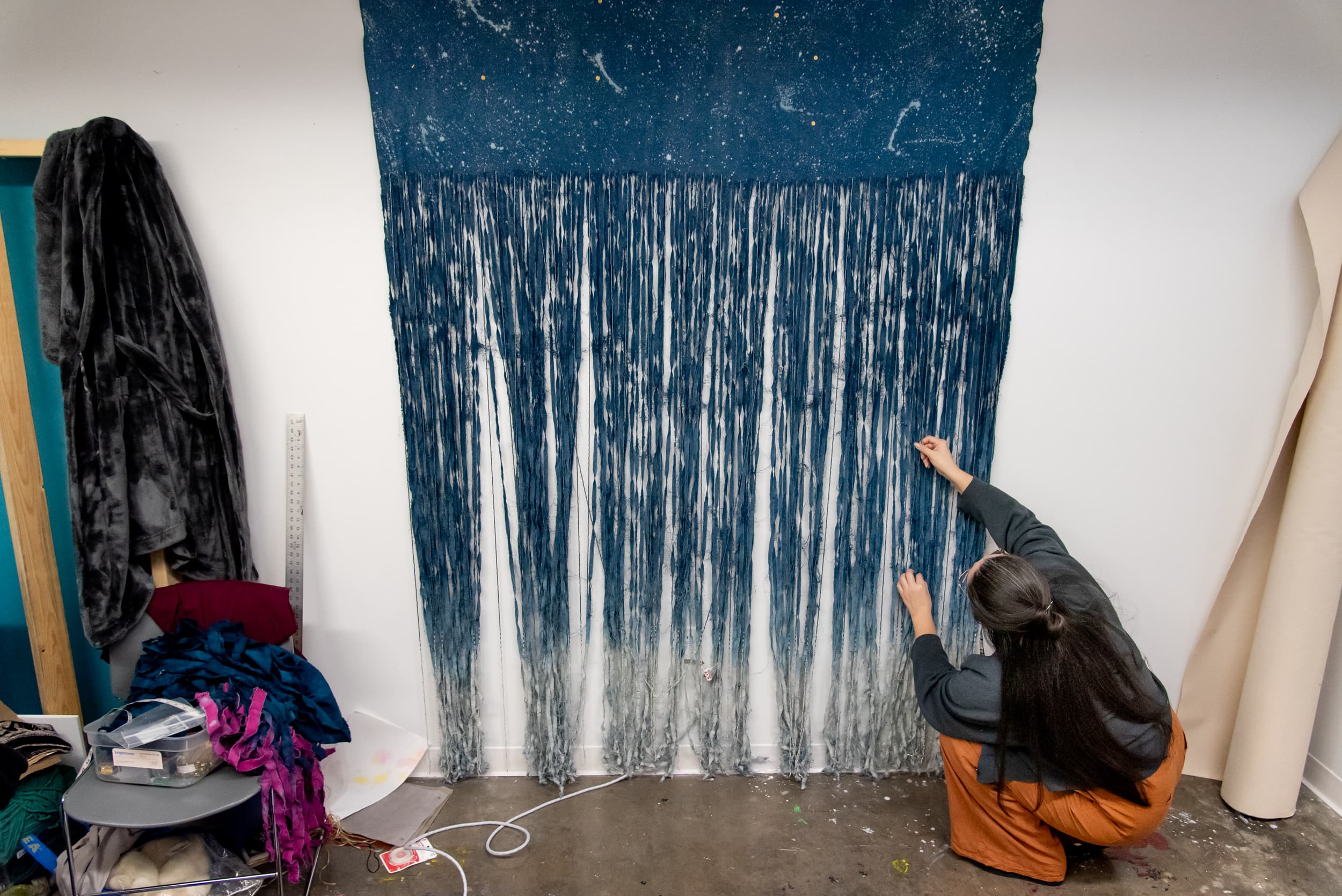
OPP: You're really collaborating with material! Can you talk about your color choices?
CB: The first piece I made was black which is closest to the aesthetic of the scalp shirts that were my original inspiration. When I made Leonid I was researching winter counts which are forms of record keeping within the Lakota culture. I kept coming across one that showed the Leonid meteor shower of 1883. There were thousands of meteors falling, and most people thought the world was ending. I became obsessed with what that sky would have looked like–the color, but also the entire star map. The beads and the brass sequence represent the actual stars around the Leo constellation where the Leonidas meteor shower originated from. Then I did a bleach splatter, added the fringe, and beaded all the edging.
In general though, color is less choice and more intuition. It really depends on how I’m feeling or how I can challenge myself. I like to see how much I can control the dye, and if I’m patient enough to keep trying until it's successful.
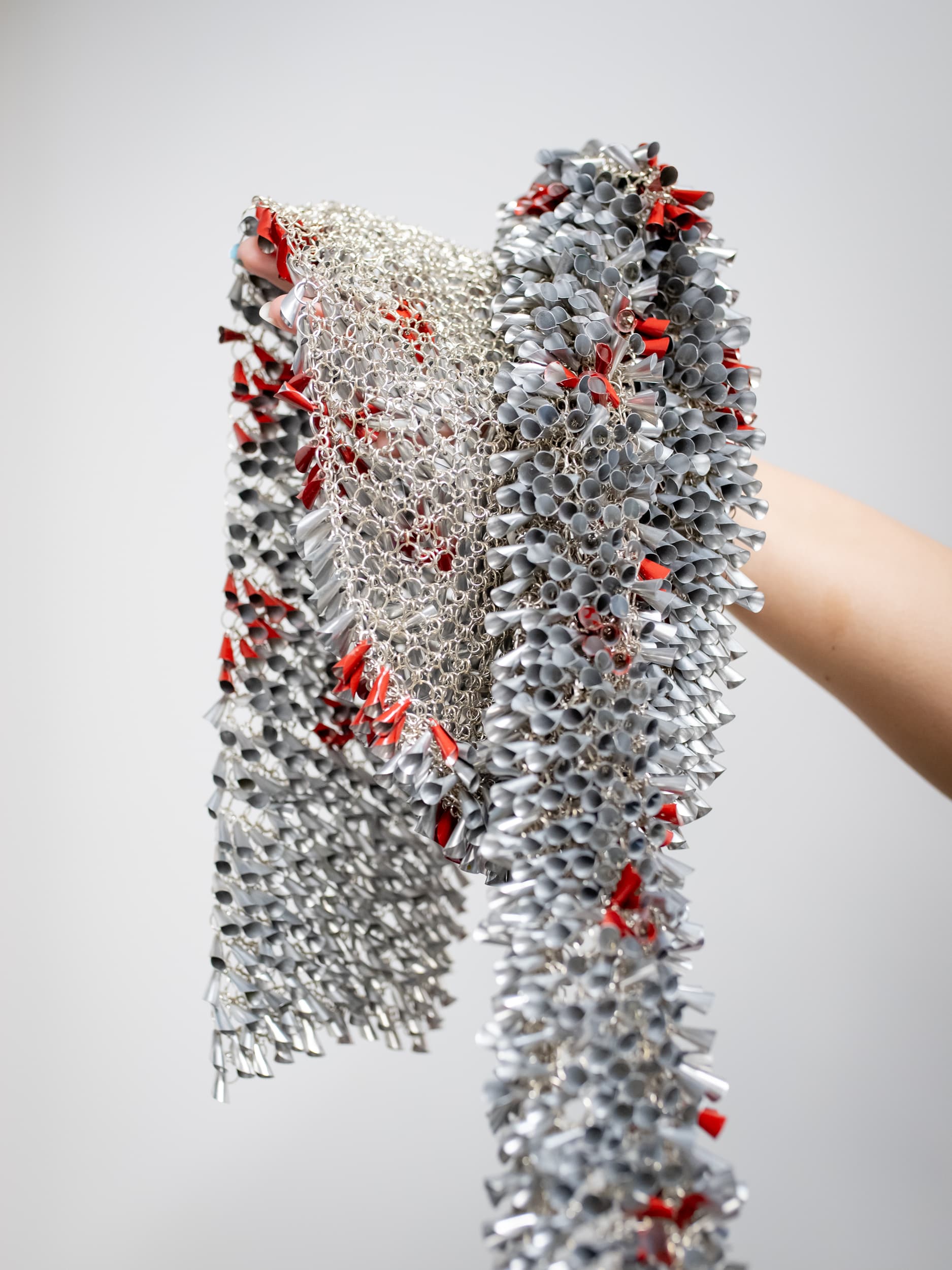
OPP: Let's talk about the jingle cone chain mail. Are you considering an activation of this work?
CB: The jingle dress dance is a healing ceremony, and that is engrained for me. I am creating literal armor using chain techniques which will eventually be the size of a standard wool blanket. That it can literally envelop the wearer feels important, that protection and healing that is so essential to life. There's also the weight of it, the sound of it, and the feeling of it. I think it's going to create something really intense and magical once it's done.
OPP: I'm always struck by the skill of these different crafts you're engaging in. They seem to represent power, knowledge, wisdom, or even status. Its passage seems sacred, particularly within indigenous communities. Do you foresee this passing on as part of your trajectory?
CG: I did not grow up within my indigenous community. My mom is from the suburbs of Chicago, and my dad's family is from the Fort Peck Reservation in Montana. My grandmother, my father's mom, is from Awahe, Nevada, and they're Shoshone, Paiute. I grew up in Tempe, Arizona, so I was pretty removed from all sides of my family. I grew up playing music and sports, but I was always interested in visual art. My parents enrolled me in some classes, and I studied photography in high school.
Essentially, I took upon myself to teach myself these things that no one had ever taught me. I taught myself to bead. I did a lot of research sitting alone in my apartment during COVID. It was a re-education, a reconnection with my cultures whether it be Irish American heritage or Native American heritage. Much of my art practice is based on reconnecting with my heritage, and putting it into my practice in a way that makes sense for me.
OPP: I’m thinking about these sources of wisdom and knowledge. Sometimes they're passed down directly and sometimes they skip a generation, or several. You’ve had to unearth them for yourself.
CB: Yes, and I’m not alone in that process. I feel very at ease within a Native American community here in Chicago. Another artist at Center for Native Futures is also Paiute, and neither of us speak the language so we are learning together. I love having these opportunities to be with people with similar experiences who are wanting to reconnect because of a void they're experiencing. Together, we can bridge the gap and pass it on to the next generation.
To see more of Chelsea’s work, please visit www.chelseabighorn.com.
Featured Artist Interviews are conducted by Chicago-based artist Lillian Heredia. When she’s not writing for OtherPeoplesPixels, Lillian creates sculptures that grapple with past experiences with religion, sustenance farming, and motherhood through the lens of her background in biology. Her work has been shown at The Ukrainian Institute of Modern Art, SAIC Galleries, Woman Made Gallery, The Martin, Purple Window, SITE Galleries, and Circle Contemporary. She received a Bachelor of Science in Biology in 2011 and is currently pursuing a Bachelor of Fine Arts at the School of the Art Institute of Chicago with an emphasis in sculpture. Lillian is a recipient of the Presidential Merit Scholarship and has been a finalist in the Pinnacle Awards and the Documentary Family Awards. Her work is currently featured on Comfort Station’s Artist to Watch series.