Stacia Yeapanis
August 9, 2024
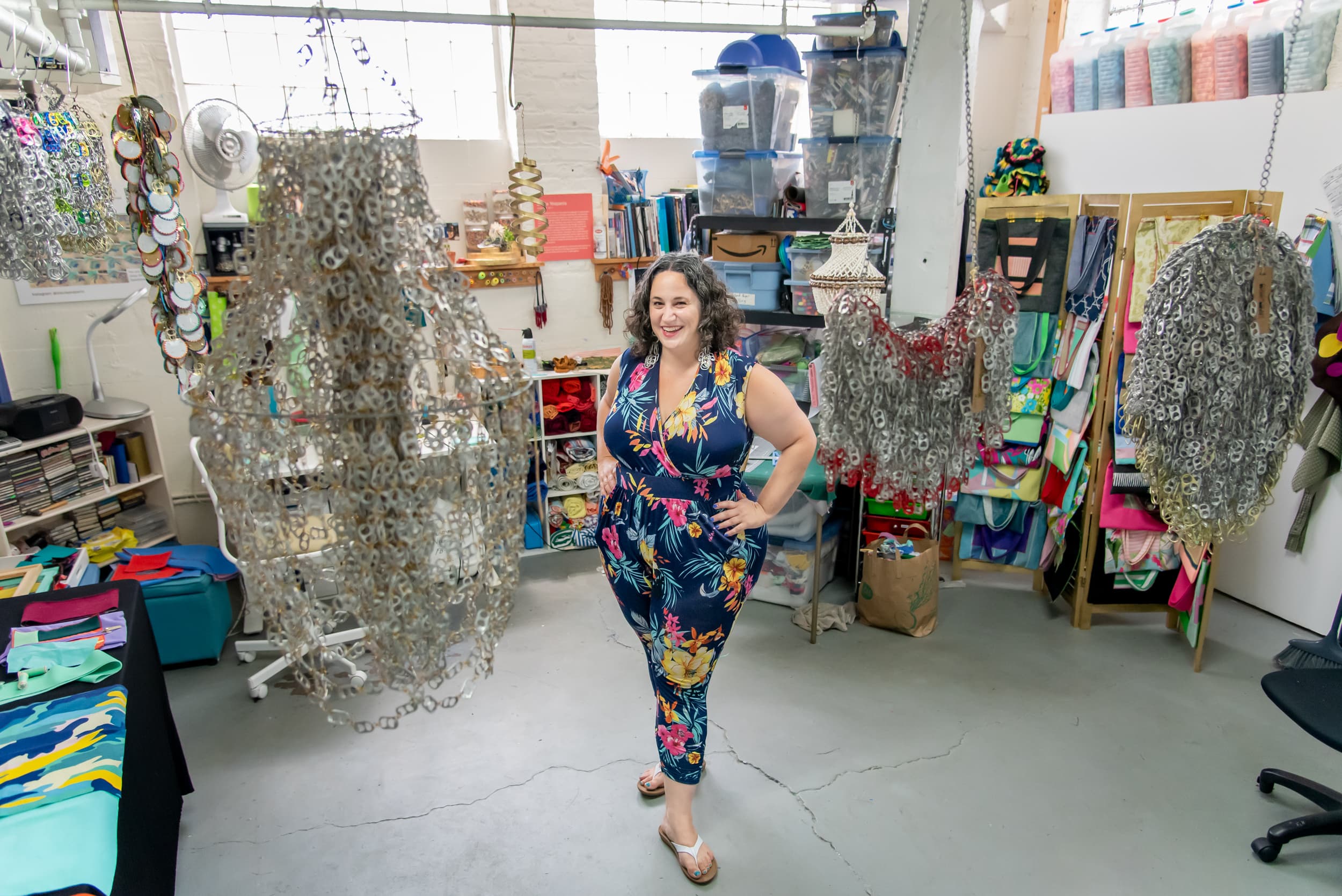
STACIA YEAPANIS is an interdisciplinary artist whose work revolves around repetitive gestures and found materials through which she explores themes of suffering, desire, pleasure, uncertainty, and the interconnectedness of the sacred and profane. Cross-stitch embroideries, remix videos, temporary collages, and improvised, sculptural installations are manifestations of Stacia’s approach to spirituality and her meditation practice, revealing insights on embracing suffering, the power of attention, and the role of art in fostering empathy and understanding.
Stacia is an Adjunct Associate Professor in the Department of Fiber and Material studies at The School of the Art Institute of Chicago, where she earned her MFA in 2006. She was a 2011-2012 Artist-in-Residence and a 2012-2013 Mentor-in-Residence at Chicago Artists’ Coalition’s BOLT Residency. Her solo exhibitions include shows at Siena Heights University (Michigan 2013), Heaven Gallery (Chicago 2014), Indianapolis Art Center (Indianapolis 2017), Robert F. DeCaprio Art Gallery (Palos Hills, Illinois 2018) and Kent State, Stark (North Canton, Ohio 2019), Finlandia University (Hancock, Michigan 2020) and Material Exhibitions (Chicago 2022). In 2023, Stacia launched Color Is My Dopamine, an umbrella under which she creates one-of-a-kind home goods, gifts and accessories by transforming the materials used in impermanent, improvised installations into sacred secular objects for everyday use.
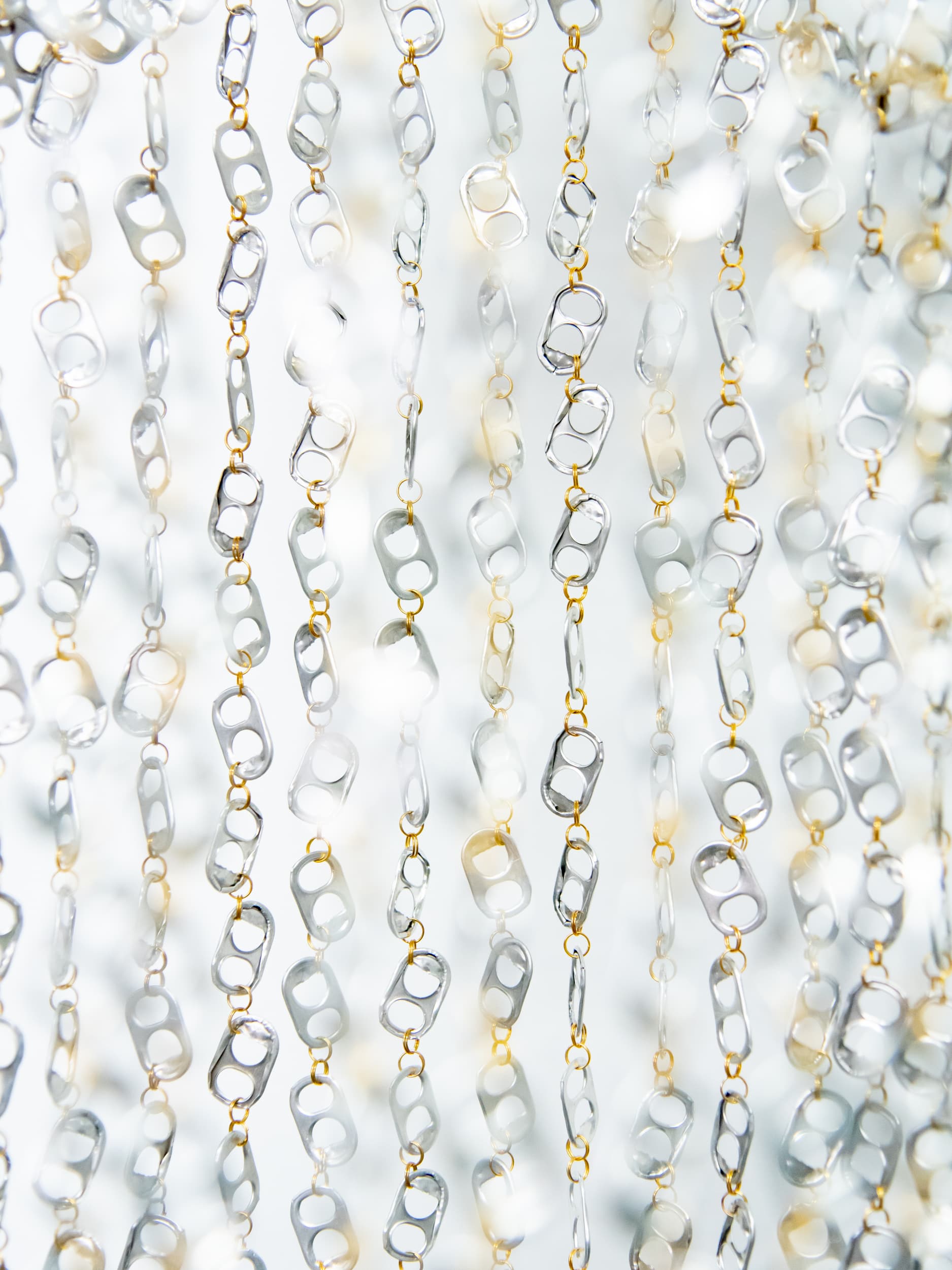
OtherPeoplesPixels: Much of your work, past and present, is a reflection on human suffering. You confront this in a very direct way, and yet avoiding suffering is such a foundational part of human nature. Has this always been your approach, or can you speak to a movement towards this remarkable level of acceptance?
Stacia Yeapanis: All my work grows out of a learned behavior of avoiding suffering. On a personal level, my practice is driven by understanding how to be present with suffering, but I started by looking at the ways that I was avoiding it. A lot of my early work was about my compulsions and the desire to understand the nature of my urges towards specific actions. I spent a lot of time thinking about what I call the compulsion continuum. On one end is the most negative manifestation, which for me is addiction; while on the other side is what is now a much larger part of my practice, meditation. I came to understand that these things aren’t opposites but are interconnected on a sliding scale in which we are constantly shifting between the poles.
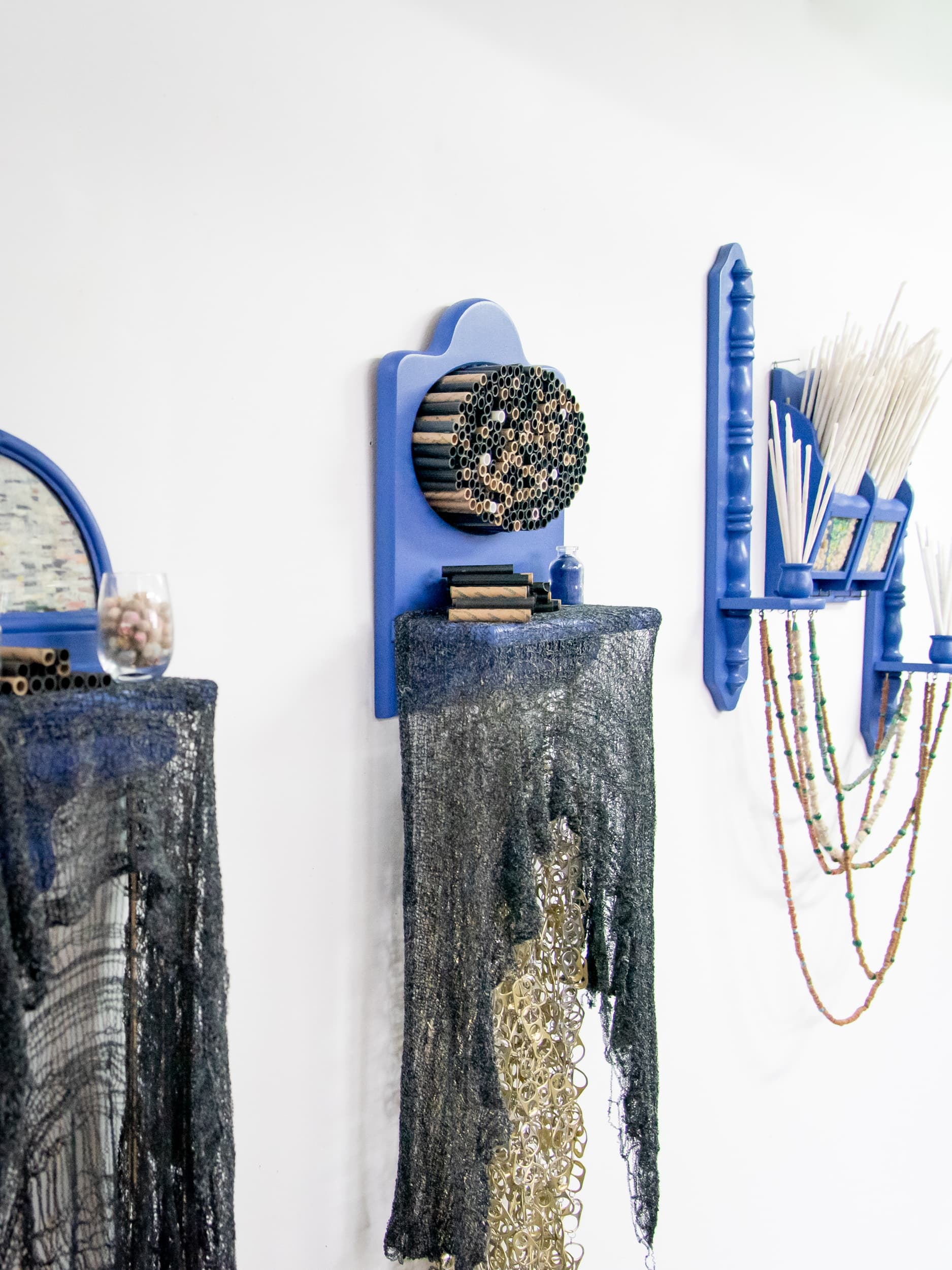
OPP: Continuums and sliding scales are also very present in how you use repetition to move between chance and intention. It’s a lovely dance in which I’m never quite sure who is leading who. Do you have a sense of how these ebb and flow when you’re embroiled in repetitive processes?
SY: Absolutely. For a long while I would say my medium is repetition, because I work in so many different materials. Sometimes it's physical such as found objects, thread, stitch, sculpture, or collage. Other times it's digital materials like television clips or clips from recorded music. Repetition was driving every single one of them. It would start with a literal repetition, but it was always a metaphor for the internal repetitions and how we relate to them. What does it mean if you say the same thing or have the same thought over and over again? Is it good or bad? Is it helpful or unhelpful?
I’m interested in the narratives we attach to that repetition. For example, I can repeat as pure obsession or as an act of avoidance with a lot of anxiety and tension in my body. If I do it in a relaxed way, the pain is balanced with ease. It really does change in terms of my experience of the making, and I’ve found that I have the capacity to experience all of it without locking a specific meaning into place.
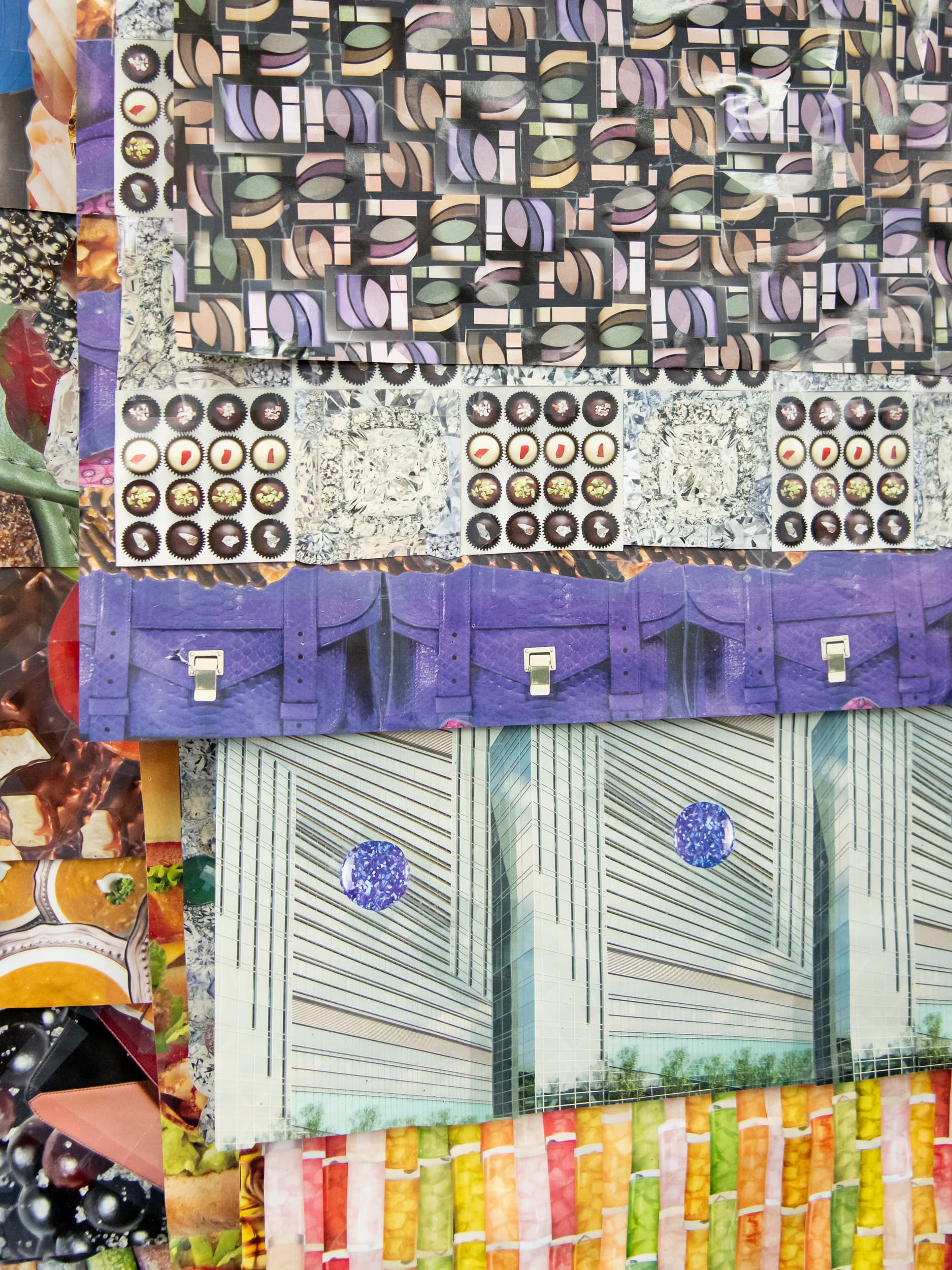
OPP: Most of your materials are the remnants of the everyday that we're constantly brushing up against and often discarding. Do you think of the recognition that stems from our embedded physical memory as a tool for allowing your audience to enter into the work?
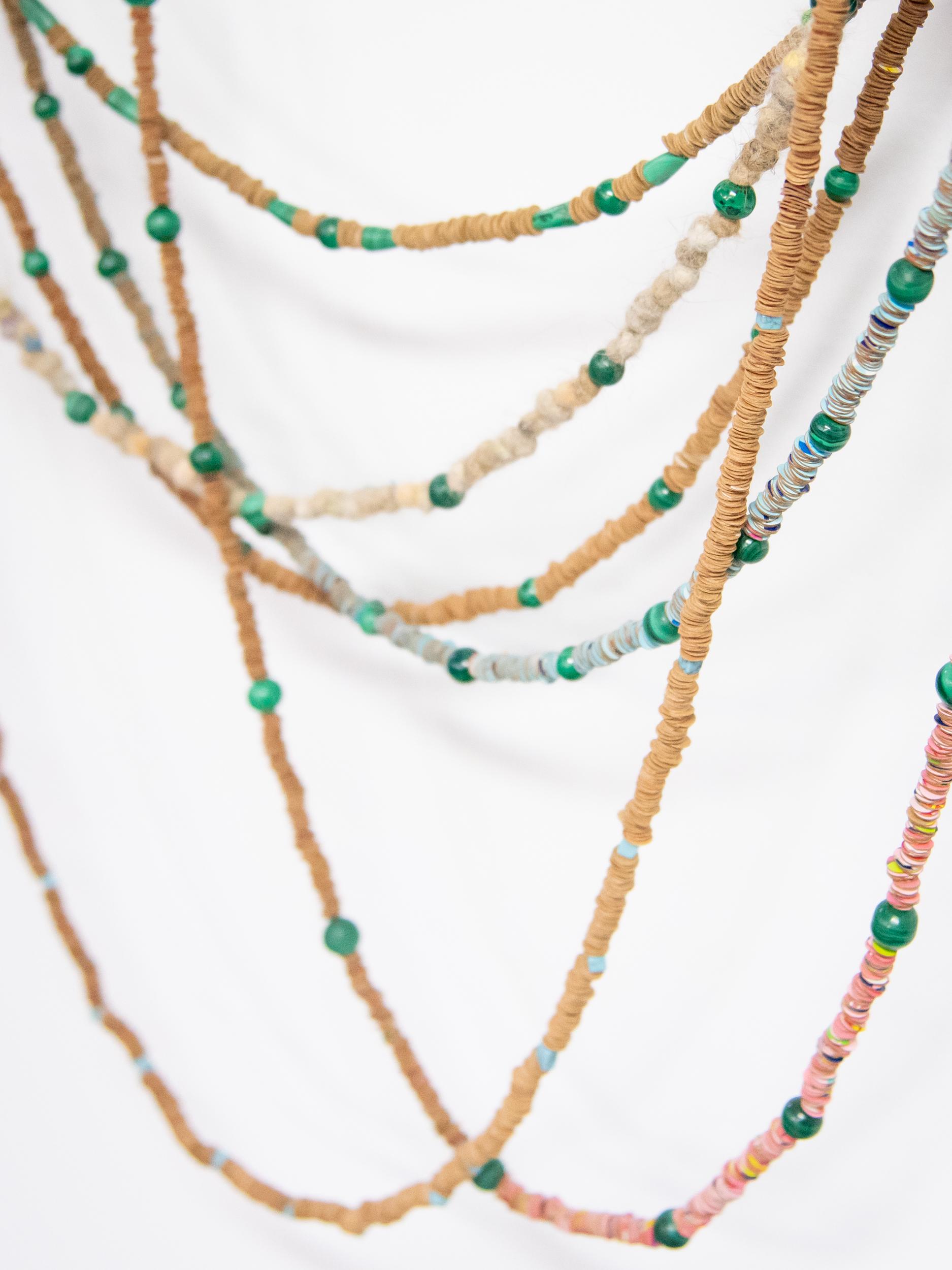
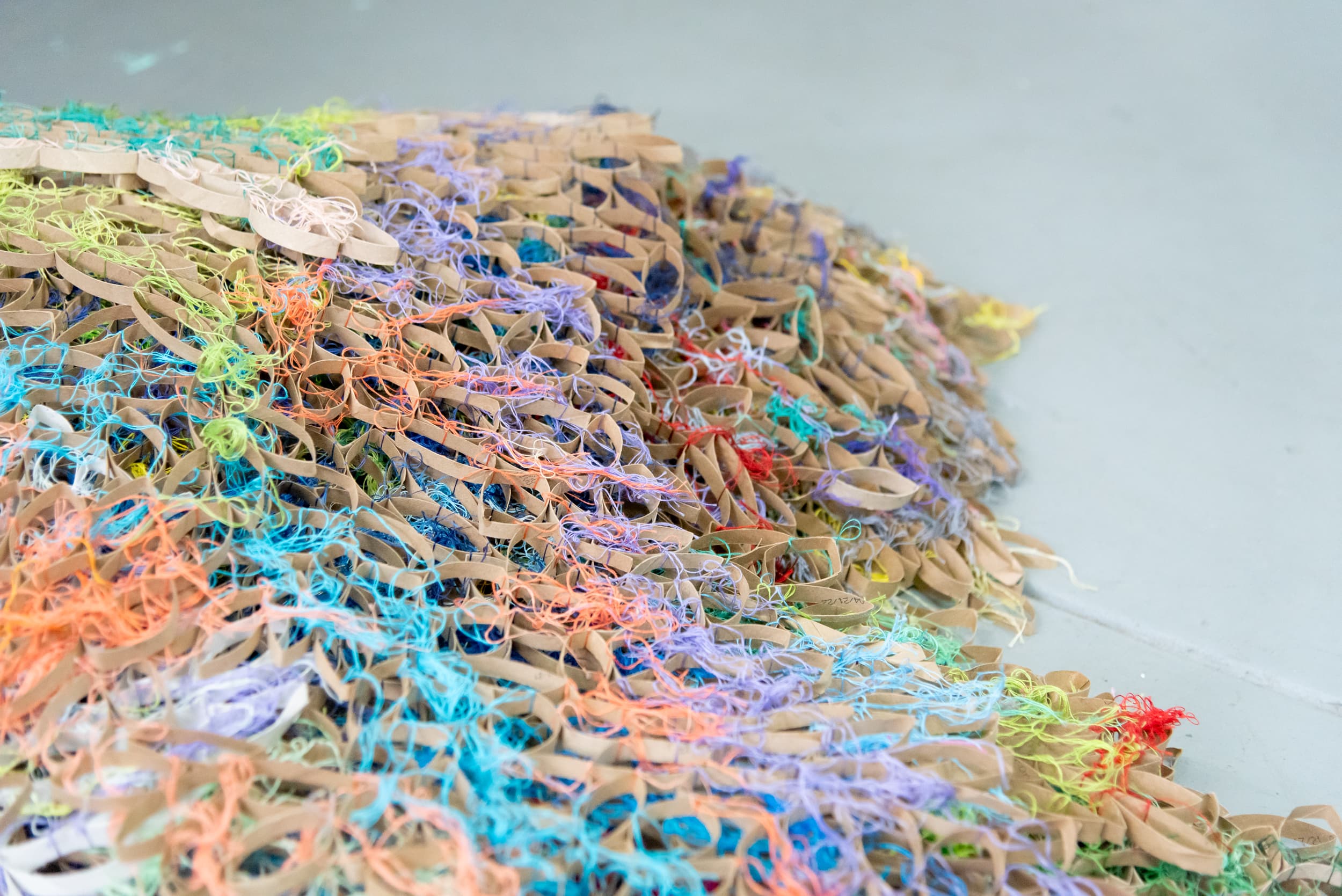
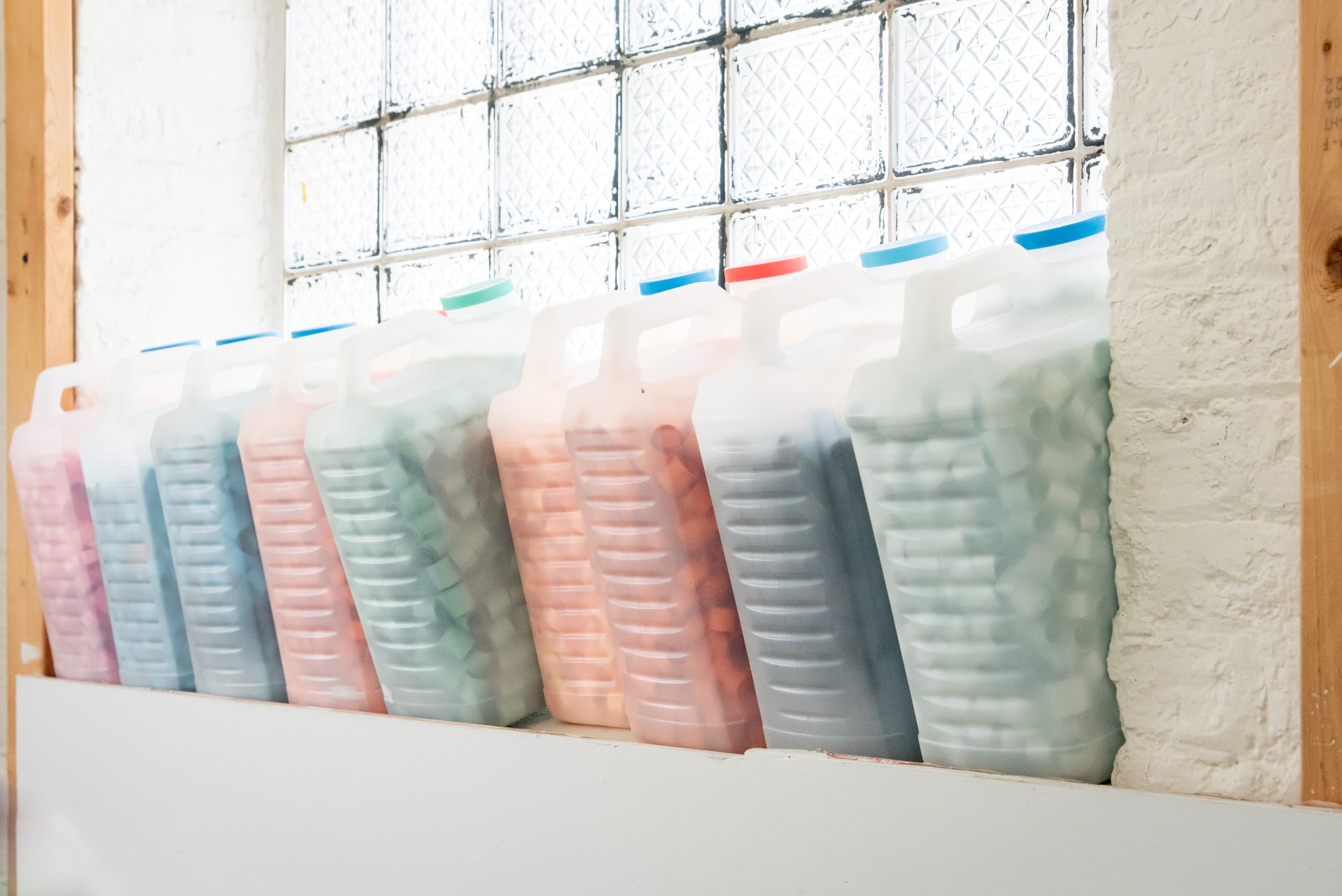
SY: I work with the material byproducts of my everyday life. Often, they are unrelated to art, things my body or my habits have generated. For example, the cat food cans and cat hair balls are connected to a routine of care—something I did every day for twenty years which was sometimes annoying but mostly beautiful. These loving gestures such as feeding and grooming yield the symbolic material, which I then spend time with as an opportunity to digest and discover everything there is to know materially. Simultaneously, I am contemplating the love I have for my cats.
OPP: You frequently speak about blurring the line between the sacred and the profane. Are you able to identify a point in your process in which this transformation takes place?
SY: I don’t ever want to transform the material so much that they're unrecognizable because there needs to be some kind of grounding in the real world. For me, these materials are already sacred, a reality my work draws attention towards. This attention in the form of skill or repetitive gesture can transform something for us. I hope to inspire that in the viewer in some way—to have a haptic relationship with these objects. Perhaps through the excess of detail and repetition I can get them to pay attention to variations within a form that is using repetition.
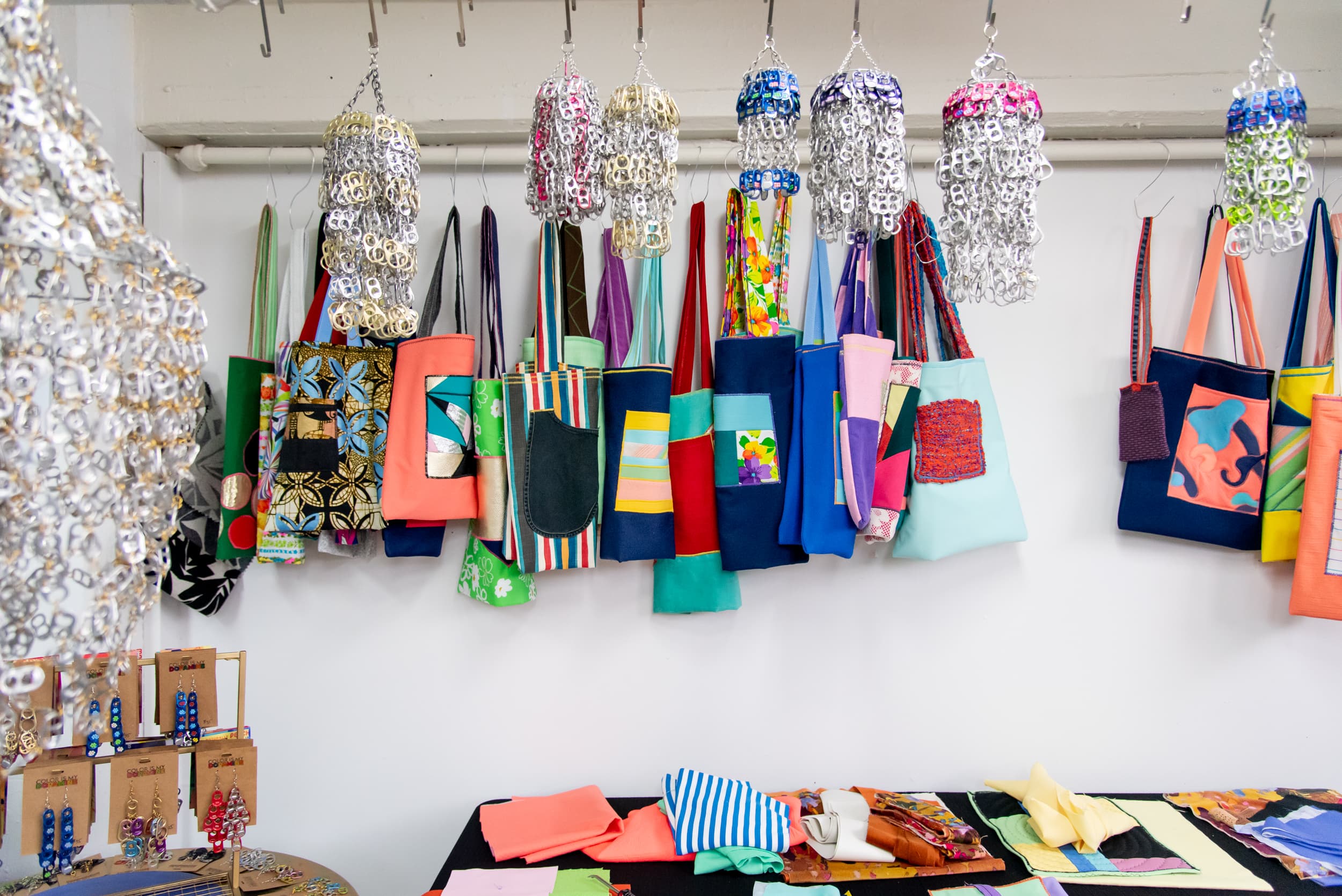
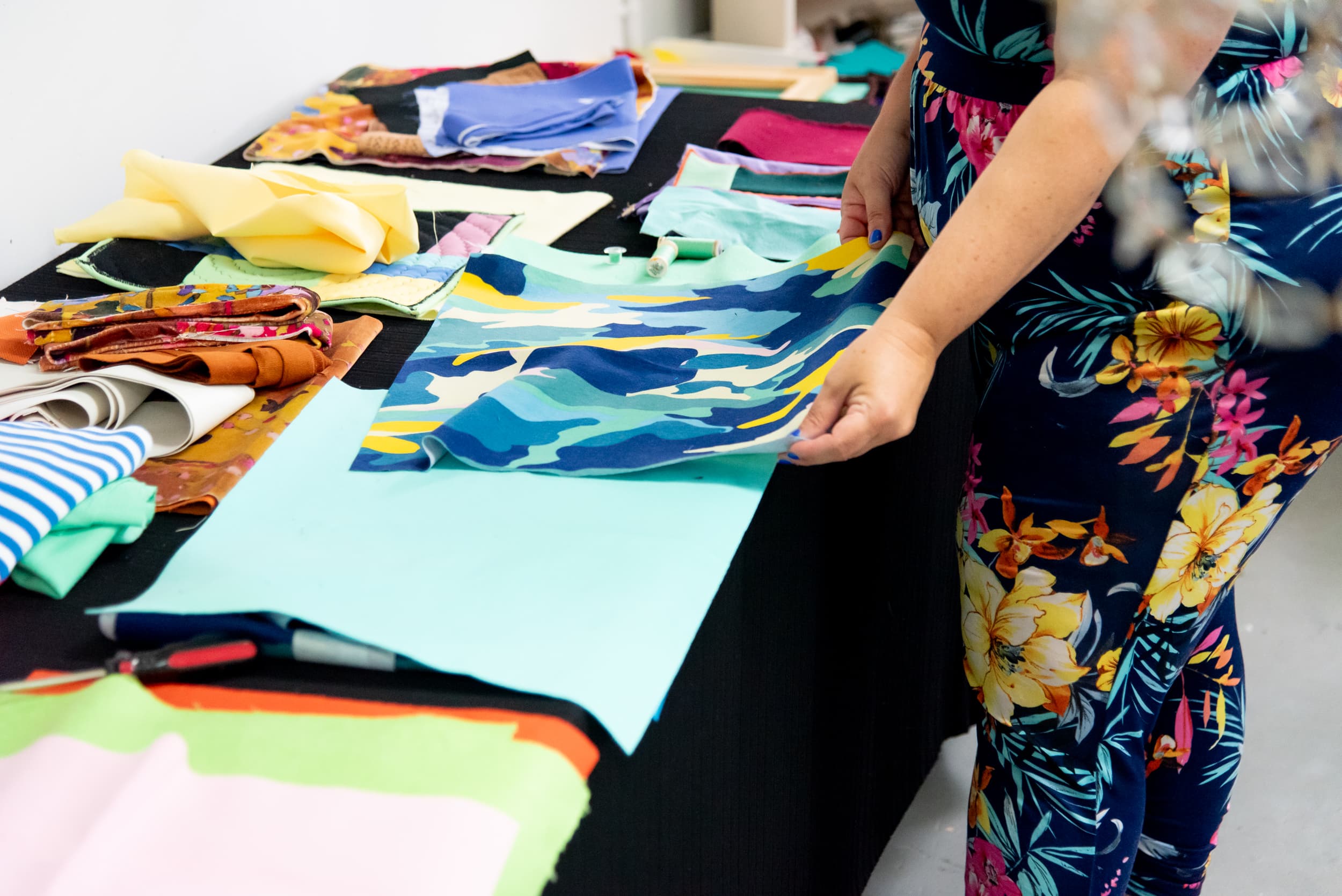
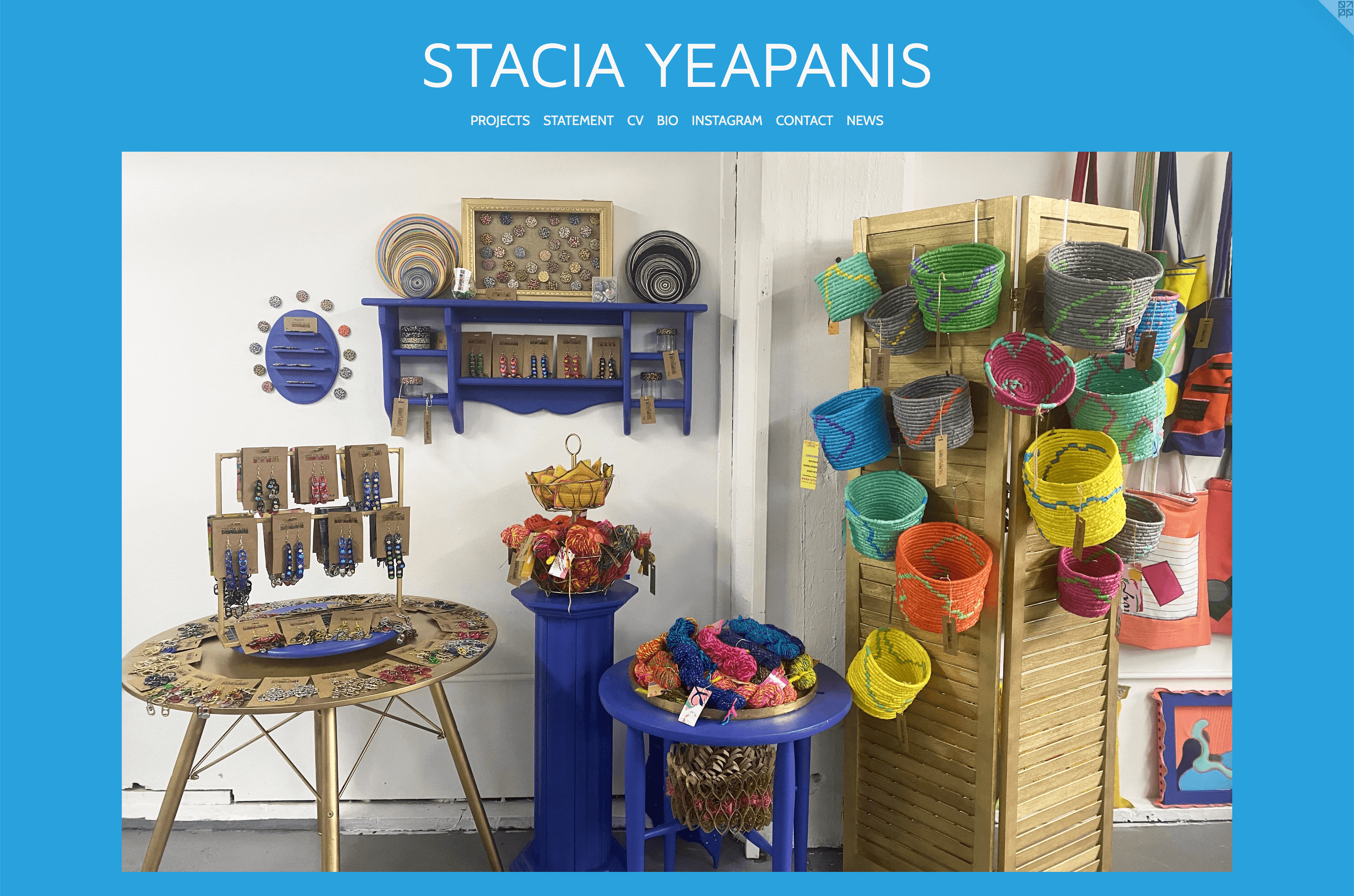
OPP: Color is My Dopamine is a term you’ve been using for a new venture into one-of-a-kind accessories and home decor in which you’re upcycling materials from past installations. How does this title reflect the practice?
SY: Color is My Dopamine acknowledges what we're learning from neurobiology about how dopamine functions and the role it plays in addiction. It's a huge part of why advertising works on us. Even when we don't want to be part of the late-stage consumer capitalist culture that we live in, we can't totally control ourselves. It also grows out of my experience as an artist and the assumptions that people make about color in the academic art world. There's dismissiveness about brightly colored things, as if color is all about appealing to the senses but has no intellectual value.
In Western culture, this belief comes from the separation of mind and the body, and the elevation of the cerebral that we can trace back to the Enlightenment Era. It's also related to the separation of the sacred and the profane. Sometimes it is useful to have separate words to describe different aspects of our lived experience, and I'm not saying the body is more important than the mind; however, I live in a culture in which they're not valued equally. That color is devalued and deemed superficial because there’s pleasure in it is a cultural bias that’s unexamined by a lot of people.
It's also a very Christian perspective, that these things are separate, and that pleasure is dangerous. I grew up Greek Orthodox and attended Catholic and Episcopalian schools. I'm very familiar with Christianity, but now I practice Dharma. Pleasure is not a problem in the Buddha’s teachings, and the thinking is fundamentally different. It's more about your attachments, and if you’re so attached to pleasure because you can't handle any discomfort, that's the issue that we should look at. You have pleasure when it's there, but you don't go chasing it. And when pain is there, you sit with that. You learn how to be present with all aspects of human experience. My private spiritual practice uses repetition to be present with whatever part of that is happening, and I try to tie those ideas into what I'm giving publicly.
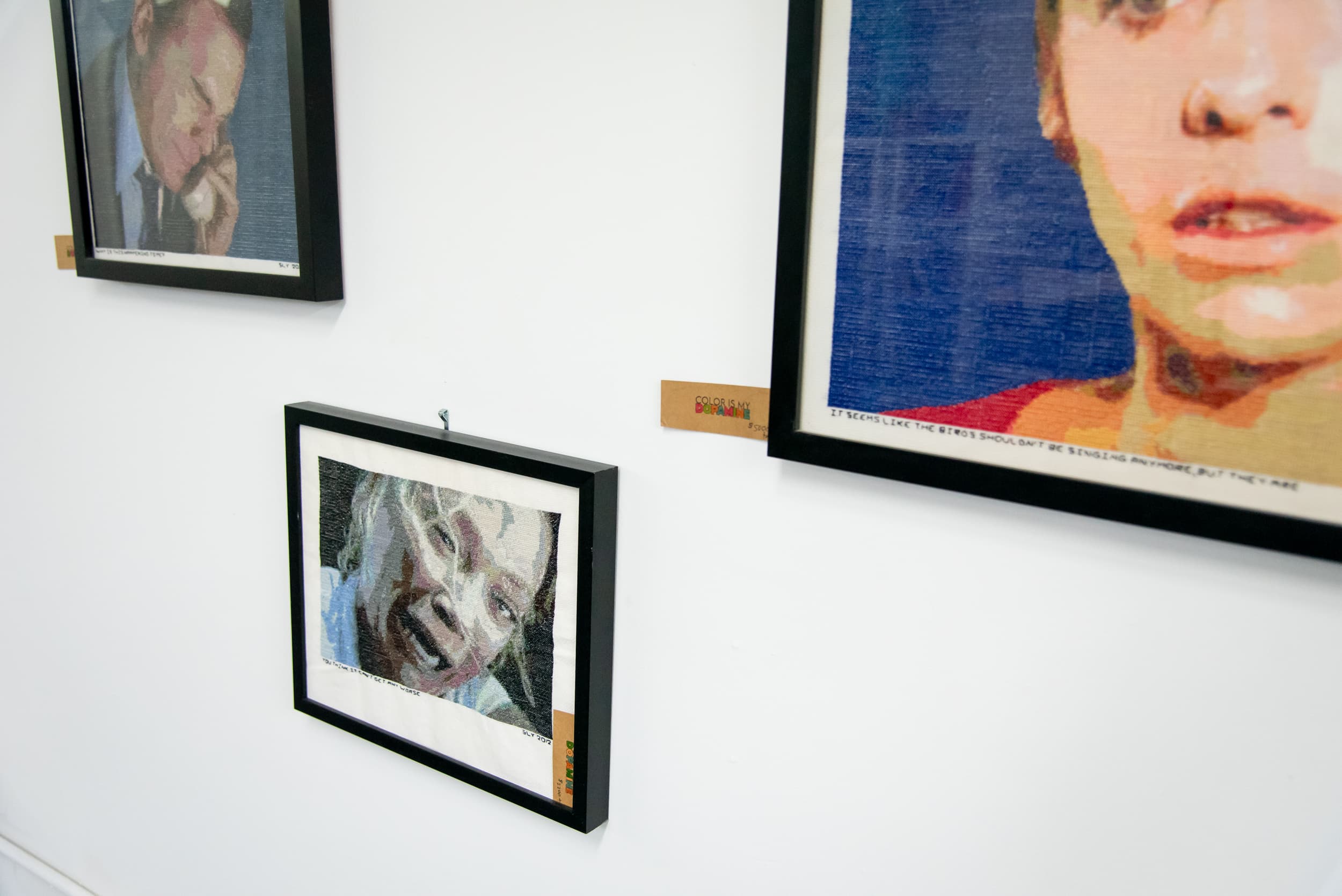
OPP: I'm intrigued by the ideas behind the Everybody Hurts series, that we use storytelling, especially emotionally charged moments, as a surrogate for our own feelings. It's one of the most fascinating things about human creatures, that we can understand deeper truths about ourselves only through bearing witness.
SY: I worked on that series for almost a decade, and it grew out of my childhood dependency on television as a coping mechanism. I started doing these cross-stitch embroideries of television stills, even before I had the language of the Buddhist teachings. I didn’t understand it as meditation, but I was finding a way to be present with the suffering of others, even if they are fictional characters. I learned a lot about empathy and compassion through watching television.
Pop culture and television are materials that I've been heavily engaged with my whole life. During the pandemic I edited Stay Right Where You Are, a narrative remix video made of clips from over sixty different television shows. Remix video is a genre that predates the internet and has a parallel but separate history from the rise of video in the fine art world. I’ve been heavily influenced by Vidding, which was originally practiced by mostly middle-aged women in the 1970s who were cutting clips from their favorite television shows together using two VCRs!
Previously, I worked with what’s called a supercut, which is the accumulation of a sound or a sentiment in which the meaning is gradually shifting. With Stay Right Where You Are, I mixed elements of supercut with an evolving narrative. The pandemic was the backdrop to explore all the ways that humans respond to uncertainty in their lives. I've always found solace watching TV, but lots of people were coping with the lockdown through engaging with this type of storytelling. I was both watching more TV and making art about how we get value through understanding narrative and the ways in which we cope, which range from petty to profound, and simple to extreme.
To see more of Stacia's work, please visit www.staciayeapanis.com.
Featured Artist Interviews are conducted by Chicago-based artist Lillian Heredia. When she’s not creating for OtherPeoplesPixels, Lillian makes work that grapples with past experiences with religion, sustenance farming, and motherhood through the lens of her background in biology. Her work has been shown at The Ukrainian Institute of Modern Art, SAIC Galleries, Woman Made Gallery, The Martin, Purple Window, SITE Galleries, and Circle Contemporary. She received a Bachelor of Science in Biology in 2011 and recently completed a Bachelor of Fine Arts at the School of the Art Institute of Chicago with an emphasis in sculpture. Lillian is a recipient of the Presidential Merit Scholarship and has been a finalist in the Pinnacle Awards and the Documentary Family Awards. Her work is currently featured on Comfort Station’s Artist to Watch series.